
Welcome to our lipedema guides library — the section of this site set aside for the narrower, more specific questions that don't fit neatly inside a single pillar page. The six main sections above are built to walk you through a topic from start to finish: what lipedema is, how it's assessed, what treatment involves, and what daily life with it looks like. These lipedema guides work differently. Each one exists because a reader asked a single, pointed question — is this a pinch-test difference or a cellulite difference, does lipedema show up on the hands, why does a fat pad hurt when pressed — and that question deserved its own page rather than a paragraph buried inside a longer article.
We keep this library separate from the main pillars on purpose. A pillar page has to serve a first-time reader who doesn't yet know the vocabulary, so it moves slowly and covers ground broadly. A guide in this section assumes you've already done some of that groundwork — maybe you've read the diagnosis overview, or you've been told by a clinician that your presentation resembles lipedema — and you're now trying to resolve one specific, often comparative question. That's why several of the guides below take a "versus" or "or" framing: cellulite or lipedema, get rid of it or manage it, awake or sedated. Comparative questions like these rarely get a fair answer inside a general overview, so they get their own space here instead.
To navigate the library, use the section headers below — Diagnosis Comparisons, Symptoms & Daily Life, Distribution & Related Conditions, Treatment, and Awake Liposuction — to jump to the cluster closest to your question. Each card links out to a full guide with its own sourcing and review date. If a guide references a concept you haven't encountered yet, most link back to the relevant pillar page so you can back up and read the fuller context before returning here.
Diagnosis Comparisons: Lipedema Guides for Telling Conditions Apart
2 guides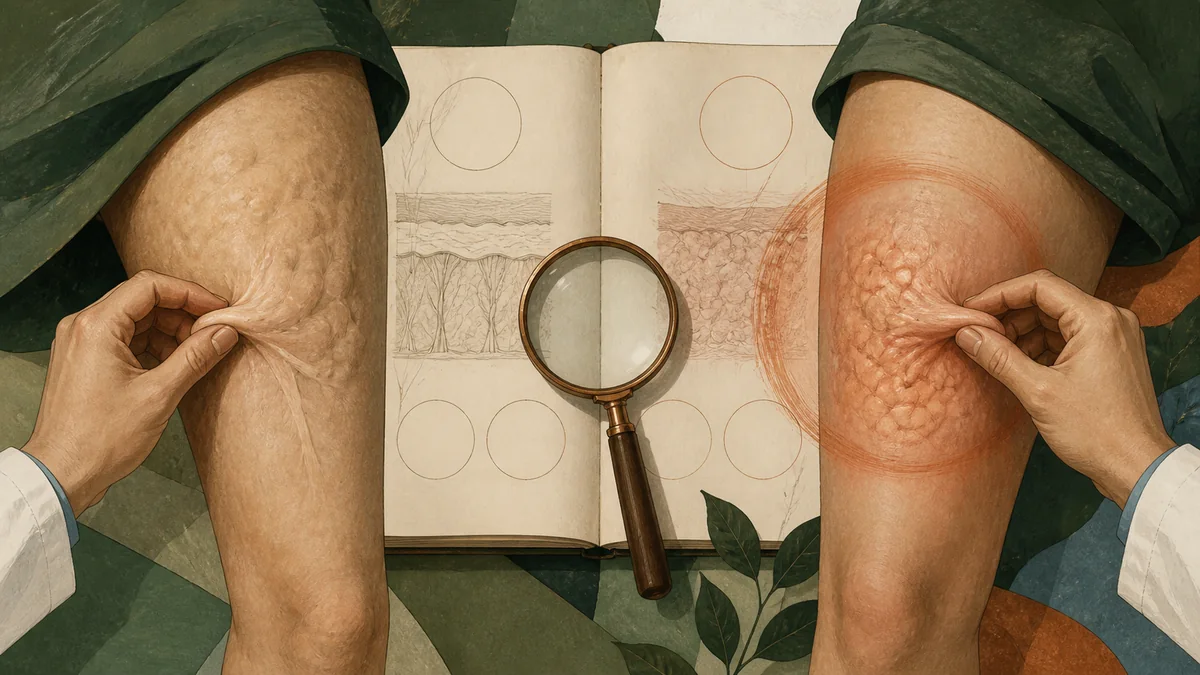
Lipedema Pinch Test vs Cellulite Pinch Test
Both tests pinch a fold of tissue, but they're screening for different things. What each one is actually looking for — and why neither is enough on its own.
Read guide →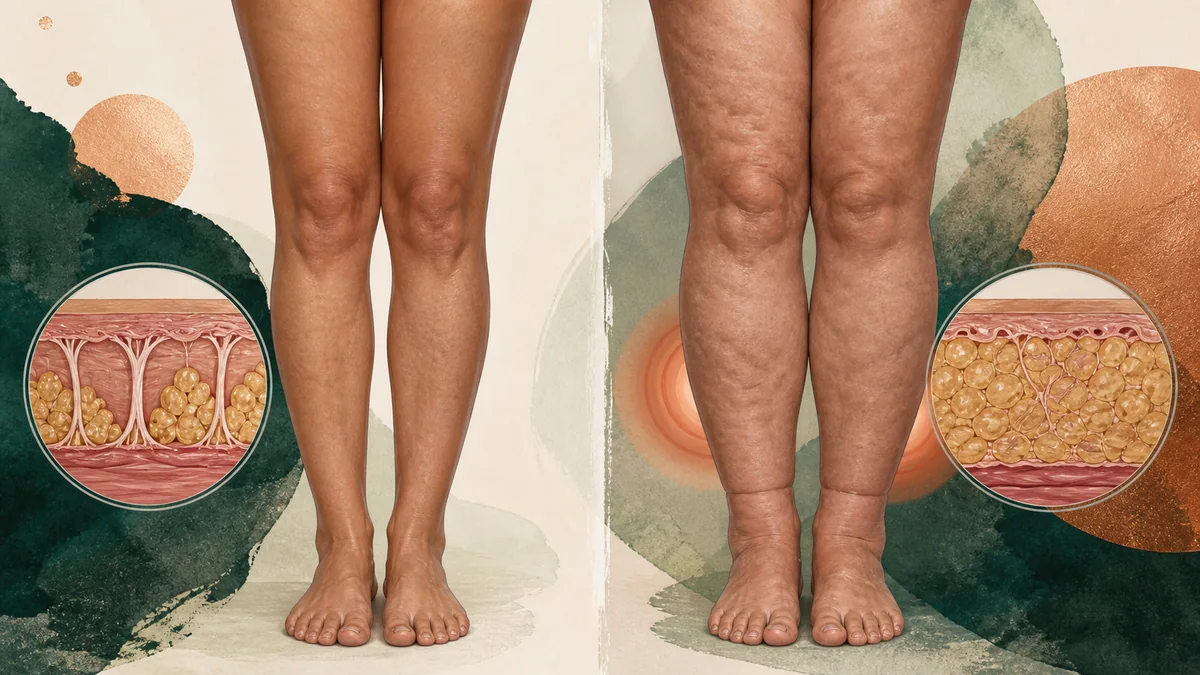
Cellulite or Lipedema? Reading the Signs on Your Legs
The signs that reliably tell the two apart — symmetry, foot involvement, tenderness, and how tissue responds to weight changes.
Read guide →Symptoms & Daily Life
1 guide
Distribution & Related Conditions
2 guides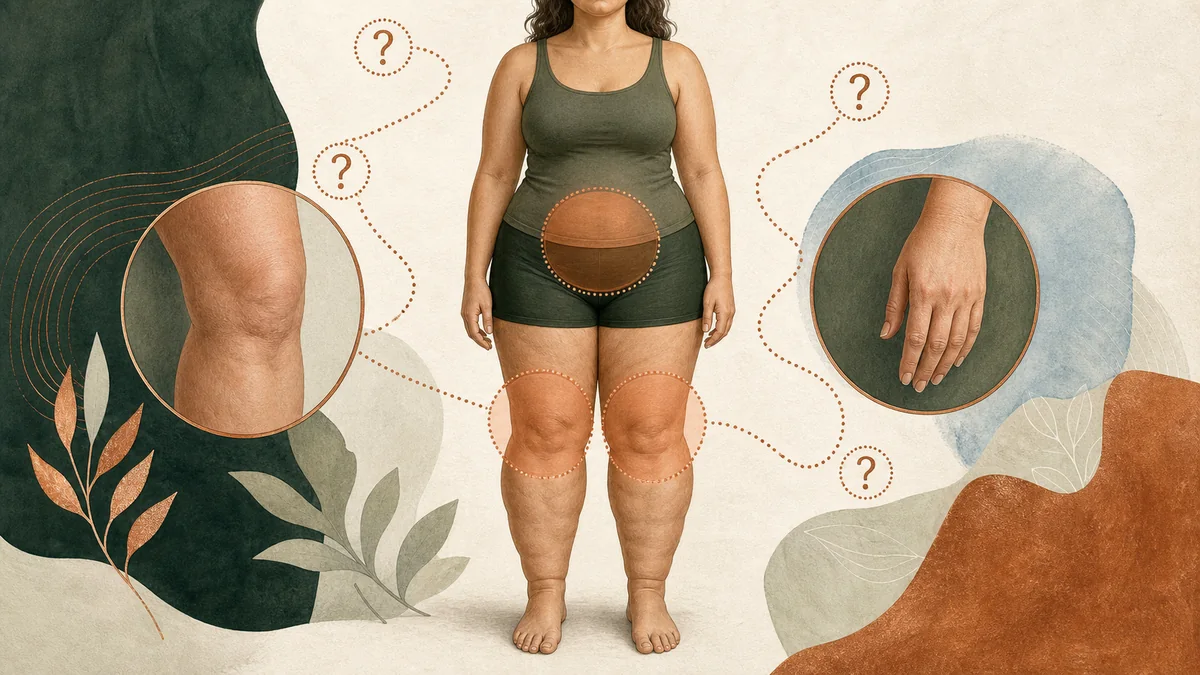
Lipedema at the Knees, Abdomen and Hands
Beyond the legs and arms: knee fat pads, abdominal fullness, and why hands and feet are classically — but not universally — spared.
Read guide →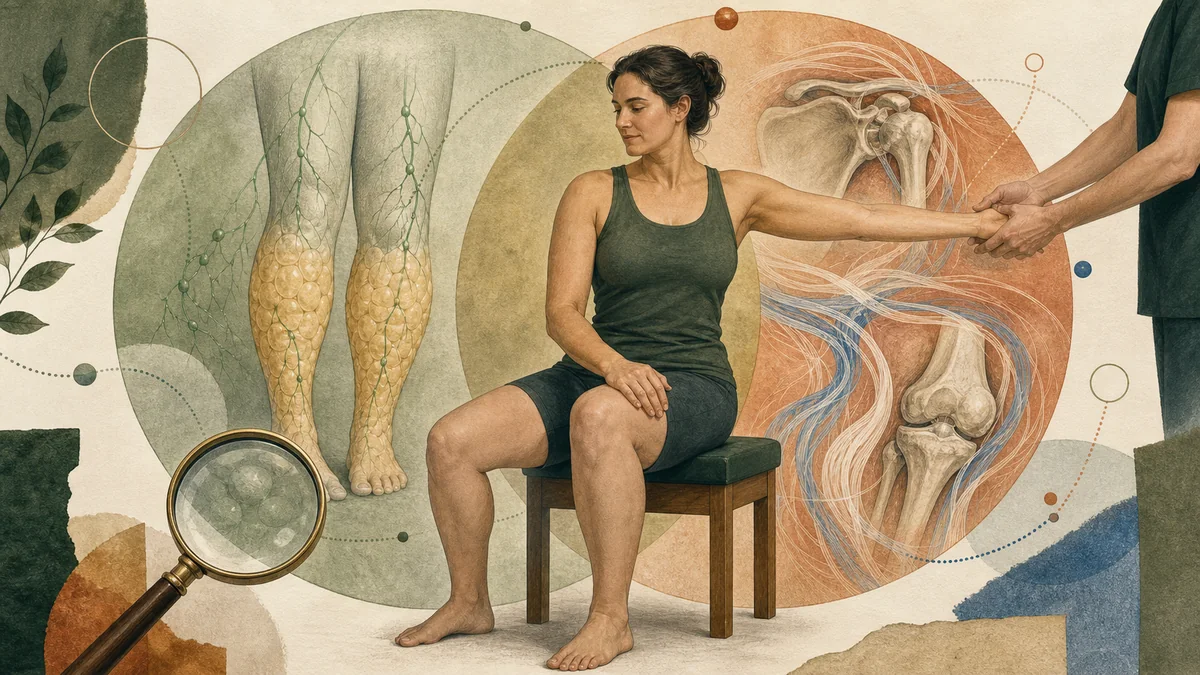
Lipedema, Hypermobility and Ehlers-Danlos
The observed overlap with hypermobility-related conditions, what the (limited) evidence actually says, and why joint symptoms are worth mentioning.
Read guide →Treatment — Honest Answers
2 guides
How to "Get Rid of" Lipedema
There is no cure. What conservative care can actually do, where surgery fits in, and why realistic expectations matter more than any single treatment.
Read guide →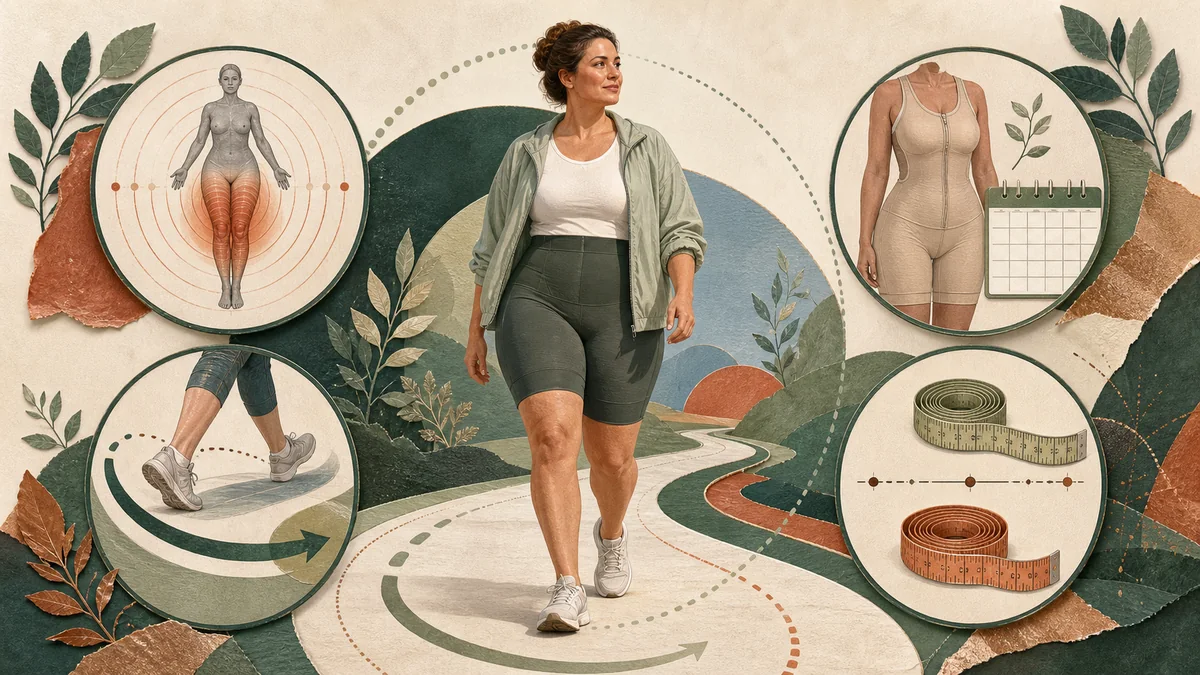
Lipedema Surgery Before & After: Realistic Outcomes
What the outcome data — not curated before/after photos — says about limb volume, symptom relief, and mobility after surgery.
Read guide →Awake Liposuction — Specific Questions
2 guides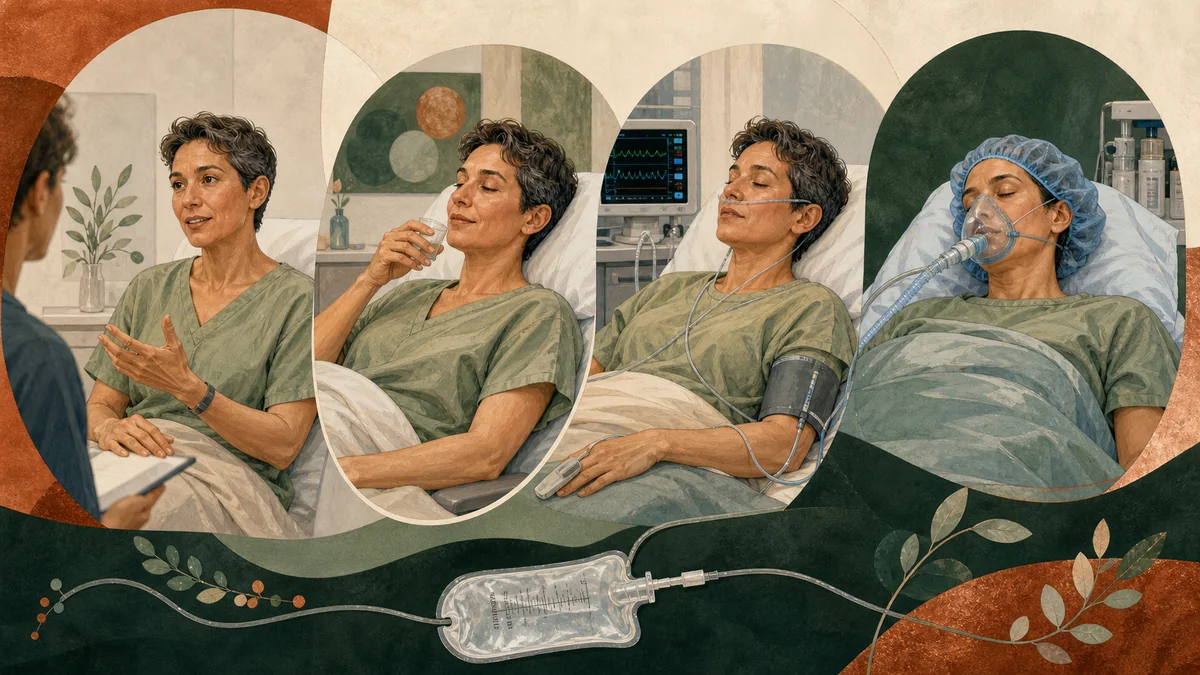
Are You Really Awake During Liposuction?
The consciousness spectrum — from fully awake to light sedation — where tumescent local anesthesia fits, and what patients actually feel and hear.
Read guide →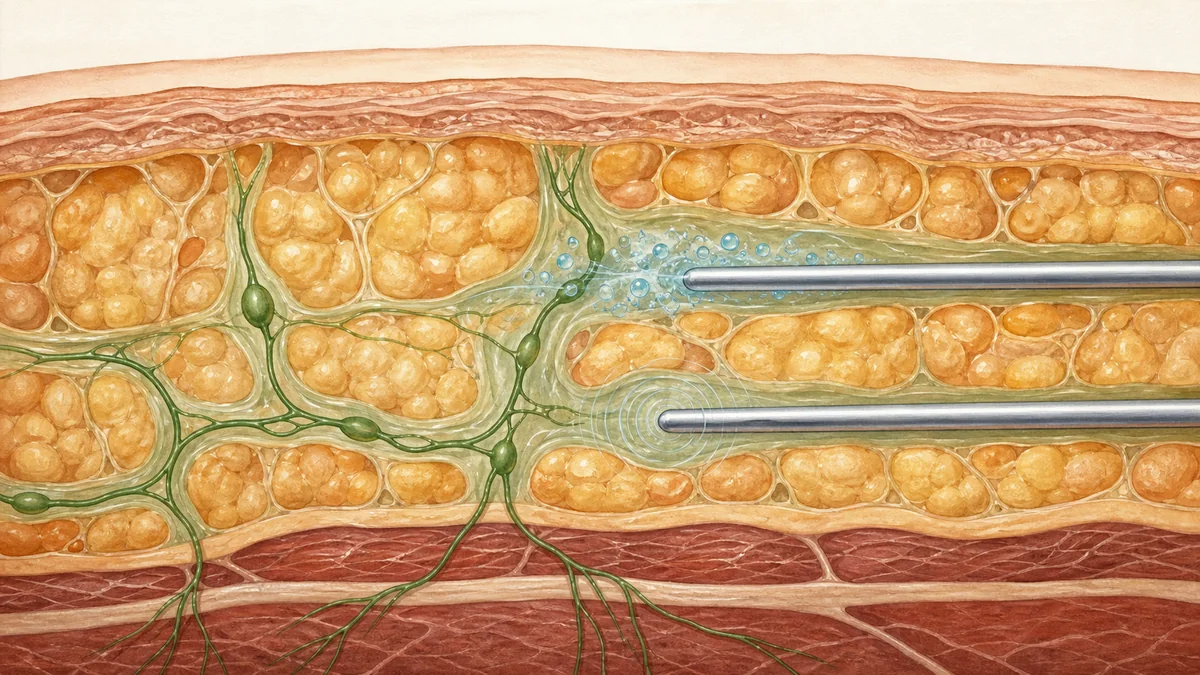
Lymph-Sparing Liposuction for Lipedema
Water-, power- and ultrasound-assisted tools compared, the surgical logic behind lymph-sparing technique, and what the term does not guarantee.
Read guide →How These Lipedema Guides Fit With the Main Site
It helps to think of this site as having two layers. The six main pillars — Is It Lipedema?, Understanding Lipedema, Treatment, Awake Liposuction, Anesthesia, and Living With Lipedema — form the foundation layer. They are built to be read start to finish, and each one is structured to give a complete, standalone understanding of its topic without requiring outside reading.
The guides in this library are the second layer. They exist because a single question is sometimes better answered on its own page than folded into a broader pillar where it would either get too little space or throw off the pillar's pacing for other readers. A guide will typically assume you already have the background a pillar provides, and it will link back to that pillar rather than repeating the explanation. If you land on a guide directly from a search engine and something feels like it's missing context, following the links back to the relevant pillar page is the fastest way to fill that gap.
Together, the pillars and the guides are meant to cover the same ground a thorough clinical consultation would, just split across the format that suits each question best. If you're not sure where to start, the pillar pages are the better entry point — the guides are meant to be found later, once a specific question sends you looking for a more focused answer.
Every guide is written from peer-reviewed sources and reviewed under our editorial process. Nothing on this site diagnoses lipedema or replaces a consultation with a qualified clinician. Full independence and review process is documented on our Editorial Standards page.