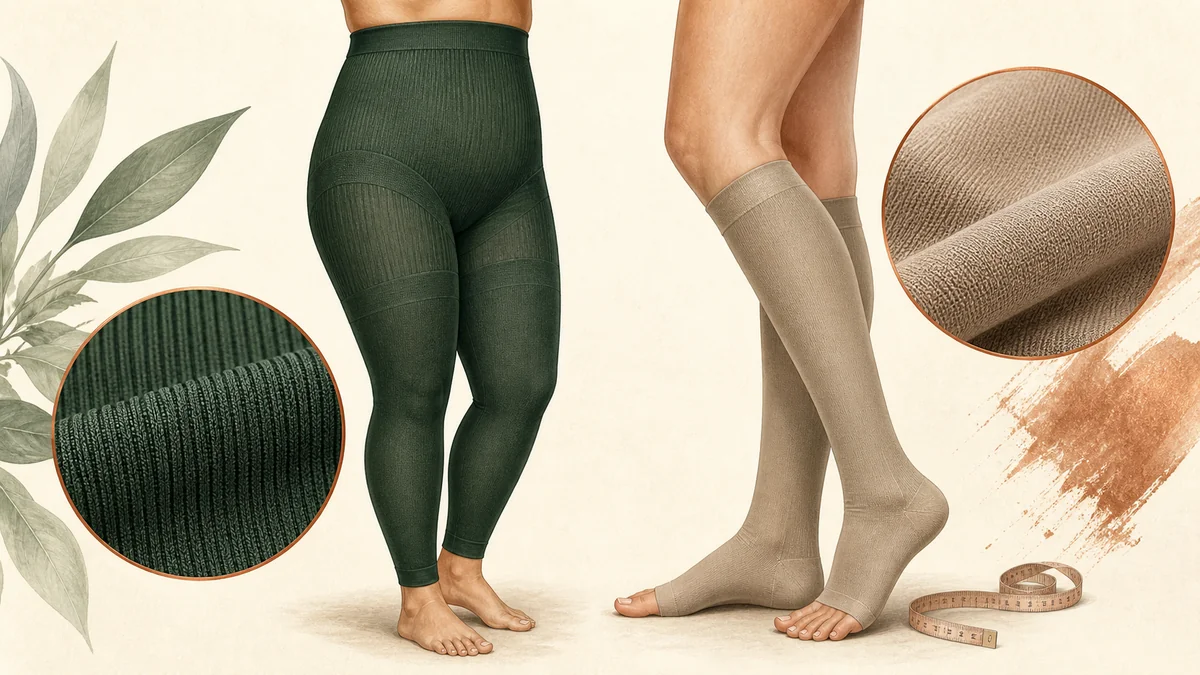
If you've been told to try compression for lipedema, you've probably also discovered how little practical guidance comes with that advice. Compression garments are one of the most consistently recommended parts of conservative lipedema care, but "wear compression" doesn't tell you which type, how tight, how often, or what to do when it doesn't feel like it's working. This guide walks through what compression actually does, how to choose and get fitted for the right type, and the honest, unglamorous realities of wearing it day after day.
This is educational information, not a substitute for a fitting or a prescription. For the bigger picture of how compression fits alongside other conservative approaches, see our living with lipedema overview.
What Compression for Lipedema Does (and Doesn't Do)
Compression garments apply graduated external pressure to the affected limb — tighter at the extremity, gradually looser moving toward the body. That pressure supports soft tissue, helps counteract the pooling of fluid that makes legs and arms feel heavy by the end of the day, and, according to the US Standard of Care for Lipedema consensus guideline, can meaningfully reduce discomfort and the sensation of tightness in lipedema-affected limbs.2 A randomized comparison of conservative approaches for severe lipedema found compression-based therapy produced measurable improvement in limb volume and symptoms over exercise alone.3 For many people, consistent compression is one of the more noticeable day-to-day symptom improvements available without surgery.
What compression does not do is reduce or remove lipedema fat tissue. Lipedema is a disorder of fat tissue itself, not primarily a fluid problem, and no amount of external pressure changes the volume or structure of that tissue. Expecting a compression garment to shrink your legs the way it manages swelling is a common and understandable misunderstanding — but it sets people up for disappointment when the visible size doesn't change even as comfort improves. Our manual lymphatic drainage guide covers a related therapy with the same honest limitation: it helps fluid and comfort, not fat volume.
Flat-Knit vs Circular-Knit
Compression garments are manufactured in two broadly different ways, and the distinction matters more in lipedema than it does for most other uses of compression wear. Circular-knit garments are produced seamlessly on a tubular knitting machine — they're generally thinner, more elastic, and less expensive, and they work well on limbs with a fairly even, gradually tapering shape.
Flat-knit garments are knitted flat and then joined with a seam, using a stiffer, less elastic fabric. That extra stiffness is exactly what makes flat-knit garments better suited to lipedema: because lipedema limbs are frequently disproportionate, have skin folds, or don't taper evenly, an elastic circular-knit garment can roll, bunch, or dig in at those irregular points. Flat-knit fabric holds its shape and distributes pressure more evenly across those contours instead. A small clinical study found improvements in physical functioning and reduced limb heaviness alongside an exercise program, using custom-fitted flat-knit garments specifically because of their ability to accommodate irregular limb shape, according to a 2024 evaluation of flat-knit compression leggings in lipedema patients.1
Neither type is universally "better" — some people use lighter circular-knit garments for milder days or early-stage lipedema, and reserve flat-knit for daily wear or more advanced tissue changes. The right choice depends on your limb shape, stage, and comfort, which is exactly why a proper fitting matters more than picking based on price or appearance alone.
Continue: Manual lymphatic drainage for lipedema →Getting Properly Fitted
Compression garments are measured, not just sized off a chart. A proper fitting involves multiple circumference measurements taken at specific points along the limb, plus length — and for flat-knit, custom garments, these measurements are used to essentially build the garment around your actual shape rather than fit you into a stock size. Fittings are typically done by a certified fitter, a Certified Lymphedema Therapist (CLT), or through a durable medical equipment provider working from a clinician's prescription.
Buying compression online based on a generic size chart is one of the most common reasons people give up on compression early — a garment that's the wrong size can be genuinely uncomfortable, ineffective, or even harmful if it's too tight in the wrong places. If you haven't been properly measured, that's usually the first thing worth changing before concluding compression "doesn't work" for you.
Wearing Schedule and Real-World Compliance
Most clinicians recommend daytime compression worn consistently, with some people also using lighter nighttime garments depending on symptoms. In principle, that sounds straightforward. In practice, it's one of the hardest parts of lipedema self-management to sustain, and it deserves to be described honestly rather than glossed over.
Heat is a real barrier — compression garments trap warmth, and hot climates or hot flashes can make all-day wear genuinely miserable. Donning a stiff flat-knit garment over sensitive, tender lipedema tissue can itself be uncomfortable or even painful, especially in the morning before moving around. Garments can also leave temporary marks, feel restrictive in work or social settings, and require planning around bathroom breaks and clothing choices. None of this means compression isn't worth doing — it means that if you're struggling with consistency, you're not failing at something everyone else finds easy. Talking to whoever prescribed or fitted your garments about donning aids, alternative closures, or adjusting the wearing schedule is a reasonable next step rather than quietly abandoning compression altogether.
Care, Replacement and Cost
Compression garments need specific care to keep their compressive properties intact: hand-washing or a gentle machine cycle in cool water, air drying rather than tumble drying, and avoiding fabric softeners or bleach, which break down the elastic fibers faster. Even with good care, most garments lose meaningful compression after roughly three to six months of regular wear — the fabric can still look intact while the actual pressure it delivers has dropped well below what was originally prescribed.
Cost varies widely: off-the-shelf circular-knit garments can run under $100, while custom flat-knit garments — the type most often recommended for lipedema — commonly cost several hundred dollars per piece, and most people need more than one to rotate while others are being washed. This guide doesn't recommend specific brands or retailers; a fitter or prescribing clinician is the right source for product-specific guidance based on your measurements and budget.
Insurance Coverage for Garments
Whether insurance covers compression garments depends on your specific plan, your documented diagnosis, and whether a clinician has written a prescription establishing medical necessity — there's no single rule that applies across all US insurers. Some plans cover a set number of garments annually with the right documentation; others offer minimal or no coverage for compression wear, treating it as durable medical equipment with its own separate rules. If cost is a barrier, ask the prescribing clinician's office about pre-authorization and documentation before purchasing, since it's typically easier to get coverage approved in advance than reimbursed after the fact. Total treatment cost planning — including compression, appointments, and any eventual procedures — is covered in more depth in our awake liposuction cost guide.
When Compression Feels Wrong
Properly fitted compression should feel firm and supportive — not painful. There's a meaningful difference between the ordinary adjustment period of getting used to daily compression and warning signs that something is actually wrong. Pay attention to:
- Deep indentations, numbness, or tingling in your fingers or toes after putting a garment on.
- Skin marks, discoloration, or breakdown that doesn't fade shortly after the garment comes off.
- Pain that's worse with the garment on than off, rather than the usual snugness.
- A garment that has started to feel loose everywhere except one uncomfortable band or seam.
Any of these are reasons to go back to whoever fitted you, or to your clinician, rather than pushing through — a garment that's actively harming circulation or skin integrity needs reassessment, not persistence.
Frequently Asked Questions
-
Do I have to wear compression forever?
For most people with lipedema, compression is a long-term part of management rather than a short course of treatment, because lipedema itself is a chronic condition. That said, how much and how often you wear it can change over time depending on symptoms, activity, and whether you've had surgery. A clinician involved in your care — see our guide on finding a knowledgeable clinician — can help adjust your compression plan as your needs change.
-
Flat-knit or circular-knit — which is better for lipedema?
Flat-knit garments are generally preferred for lipedema because their stiffer, less elastic fabric holds its shape against skin folds and irregular limb contours instead of rolling or digging in. Circular-knit garments are lighter and more affordable but tend to fit best on more evenly-shaped limbs. Many people use flat-knit for daily wear and circular-knit for lighter-support days — the resources in our lymphatic drainage guide can help you understand where compression fits into your broader plan.
-
Does insurance cover compression garments for lipedema?
It depends heavily on your specific insurance plan, your diagnosis coding, and whether a clinician has documented medical necessity — there's no single national rule that applies to everyone. Some plans cover a set number of garments per year with a prescription, others cover very little. It's worth asking your prescribing clinician's office about documentation before you buy, since paperwork submitted after the fact through a knowledgeable clinician is often easier to get reimbursed.
-
How often should compression garments be replaced?
Most compression garments lose meaningful elasticity after about three to six months of regular wear and washing, even if they still look intact, because the compressive fibers stretch out faster than the visible fabric wears down. A garment that no longer feels snug when you put it on in the morning is usually past its effective life. Replacing garments on a schedule — not just when they visibly fail — helps keep the compression doing its job.
-
Can compression garments hurt if they're too tight?
Yes. Properly fitted compression should feel firm and supportive, not painful, and it should never leave deep indentations, numbness, tingling, or color changes in your fingers or toes. Pain, skin breakdown, or marks that don't fade shortly after removal are signs the garment is wrong for your current size or shape and needs reassessment — see our pain management guide for more on when symptoms need clinical attention.
-
Will compression garments shrink lipedema fat?
No. Compression manages fluid, supports tissue, and can reduce heaviness, swelling, and discomfort, but it does not reduce or remove lipedema fat tissue itself. That distinction matters because expecting fat reduction from compression alone sets people up for disappointment. Our treatment options guide explains what actually addresses the underlying fat tissue.