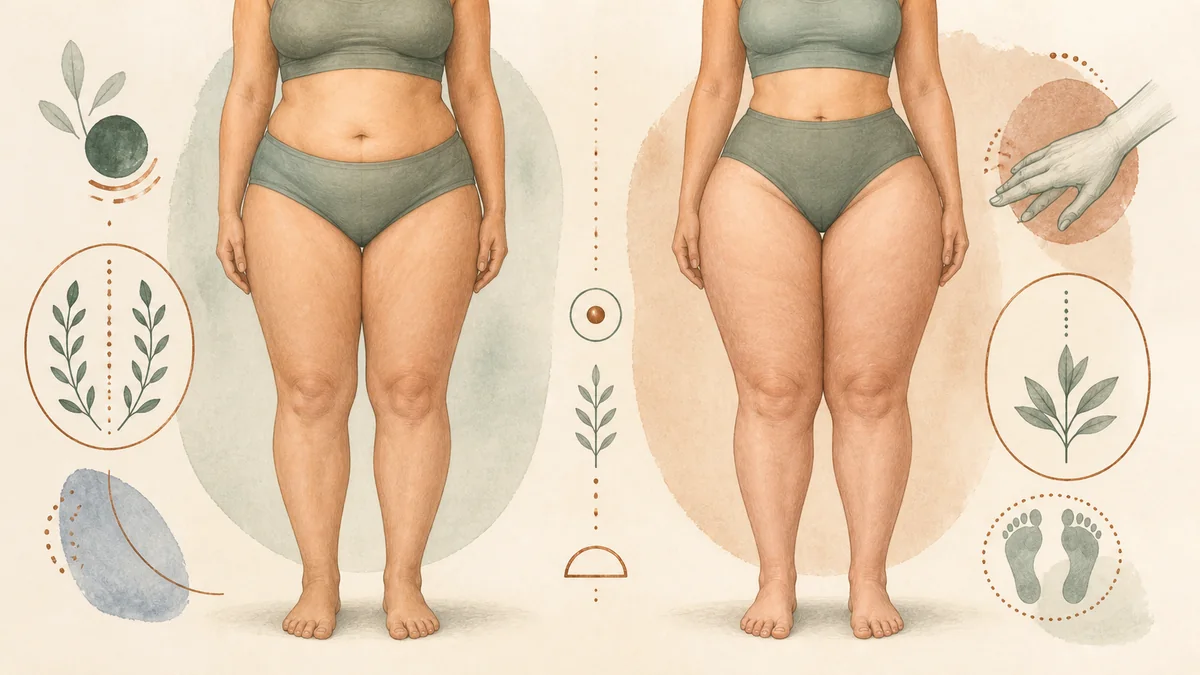
Lipedema or just fat legs is one of the most common confusions when lower-body changes do not fit ordinary weight gain. Lipedema is a disease of fat tissue — not a lifestyle outcome — even though the two can look alike at a glance.
This guide covers the signs that separate lipedema from general weight distribution, so you have language to bring to a clinician. Nothing here is a diagnosis — only an in-person evaluation can confirm lipedema. See our is it lipedema? overview for the wider picture.
Why This Question Gets Dismissed So Often
Lipedema develops gradually, usually around puberty, pregnancy, or menopause, and early stages can look like ordinary weight gain — smooth skin, legs larger than the rest of the body would predict. Because weight fluctuates at those same life stages, both patients and clinicians often reach for the simpler explanation first. In a medical culture where weight is the default answer for lower-body symptoms, a genuine fat-tissue disorder gets filed under "needs to lose weight" for years — sometimes a decade or more — before anyone considers lipedema specifically, a delay documented in a 2025 PMC clinical review of lipedema.3 That gap reflects how under-recognized the condition still is, not a failing on the patient's part.
Lipedema or Just Fat Legs: Signs That Point Toward Lipedema
A handful of specific signs, especially in combination, shift the picture away from general weight gain and toward lipedema:
- Disproportion — a noticeably larger lower body compared to a relatively slim torso and upper body, rather than weight distributed evenly throughout.
- Symmetry — both legs (or both arms) affected to a similar degree, rather than one side being visibly larger.
- Pain and tenderness — the affected tissue hurts or feels tender when pressed, which a StatPearls overview of lipedema notes ordinary fat typically does not.1
- The ankle or wrist "cuff" — normal-sized hands and feet meeting noticeably larger limbs, a pattern general weight gain doesn't produce.
- Easy bruising — bruises that appear without a clear cause or memorable bump.
- Nodular texture — small, movable lumps under the skin, sometimes described as feeling like peas or rice.
None of these signs is proof by itself, but several together is a strong reason to raise lipedema or just fat legs by name at your next appointment — see our lipedema vs cellulite guide and pinch test comparison for related checks.
Signs That Point Elsewhere
Some patterns point away from lipedema: fat spread relatively evenly across the whole body rather than concentrated in the legs or arms; fat that responds even modestly to diet and activity, since Herbst and colleagues' 2021 standard-of-care guideline documents that lipedema-affected tissue resists that kind of change;2 and painless enlargement without tenderness, easy bruising, or a cuff-like boundary. That does not mean weight-related fat "doesn't count" — just that the lipedema picture above is less likely.
You Can Have Both
Lipedema and general excess weight are not mutually exclusive. A person can carry broader weight throughout the body while also having lipedema-specific fat in the legs or arms that behaves differently: disproportionate, symmetrical, painful, and resistant to weight loss. Each needs its own attention — standard weight guidance does not treat the lipedema component, and conservative care or surgery for lipedema does not substitute for broader health management when that is separately relevant.
Continue: Lipedema in slim people — the flip side of this confusion →Why Weight Loss Changes the Picture (but Not the Lipedema Fat)
A pattern that trips many people up: someone loses weight through diet, exercise, or medical treatment, and their torso, face, and arms slim down — but their legs stay almost the same size. Rather than "stubborn genetics," this disproportionate, symmetrical resistance is one of the more telling lipedema signs, because per a 2021 US standard-of-care guideline, lipedema fat resists changes that clearly affect fat elsewhere in the body.2 Name that pattern to a clinician if it matches your experience.
What to Do Next
If several signs above sound familiar, organize what you've noticed for your next appointment: when the disproportion started (puberty, pregnancy, or menopause); whether the area is tender, painful, or bruises easily; whether it responded at all to diet or exercise; and whether close relatives have a similar body shape. Name lipedema specifically rather than only saying "heavy legs" or "just weight."
Lipedema is identified through clinical exam and history, not BMI alone. Our how lipedema is diagnosed guide walks through what that evaluation involves.
Frequently Asked Questions
-
How do I know if it's lipedema or just fat legs?
No single sign is proof on its own, but a cluster of them raises the likelihood: symmetrical, disproportionate enlargement (often a much larger lower body than upper body), pain or tenderness to pressure, easy bruising, a visible cuff where normal-sized feet meet larger ankles, and little to no change despite diet and exercise. If several of these sound familiar, our how lipedema is diagnosed guide explains what a clinical evaluation actually involves.
-
Does lipedema hurt?
Yes, often. Pain and tenderness to pressure are among the more distinctive lipedema signs, and they're a big part of what separates it from ordinary weight-related fat, which generally doesn't hurt when pressed. If your legs feel disproportionately heavy or sore to the touch, that's worth mentioning specifically to a clinician rather than assuming it's simply extra weight — see our lipedema vs cellulite guide for related pain-based signs.
-
Will dieting fix it?
Not on its own. Lipedema fat is well documented to resist diet and exercise, so a person can lose weight in the face, arms, or torso while the affected areas stay largely the same size. This resistance is one of the most frustrating and least understood parts of the condition, and it is not a sign of insufficient effort. Our treatment options guide covers what actually helps.
-
Can I have lipedema and obesity at the same time?
Yes, and it's common — the two are not mutually exclusive. Someone can carry general excess weight throughout the body and also have lipedema-specific fat that behaves differently: disproportionate, painful, and diet-resistant. Recognizing lipedema alongside any broader weight picture matters because the two are managed differently, a distinction our lipedema in slim people guide also explores from the opposite angle.
-
Why do doctors sometimes miss lipedema and just say to lose weight?
Lipedema is under-recognized in general medical training, and its symmetrical, gradual pattern can superficially resemble ordinary weight gain if a clinician isn't specifically looking for the differentiating signs — pain, disproportion, diet-resistance, and the cuff sign. This is a well-documented gap, not a reflection of the patient's effort or honesty. Naming lipedema specifically when you describe your symptoms, as covered in our is it lipedema? overview, can help get it recognized sooner.
-
What should I do if I think it might be lipedema?
Start by tracking what you're noticing — when it began, whether it's symmetrical, whether it's painful, and whether close relatives have a similar body shape — then bring that information to a clinician and ask about lipedema by name. Our how lipedema is diagnosed guide explains what a proper evaluation involves and which specialists are most likely to recognize the condition.