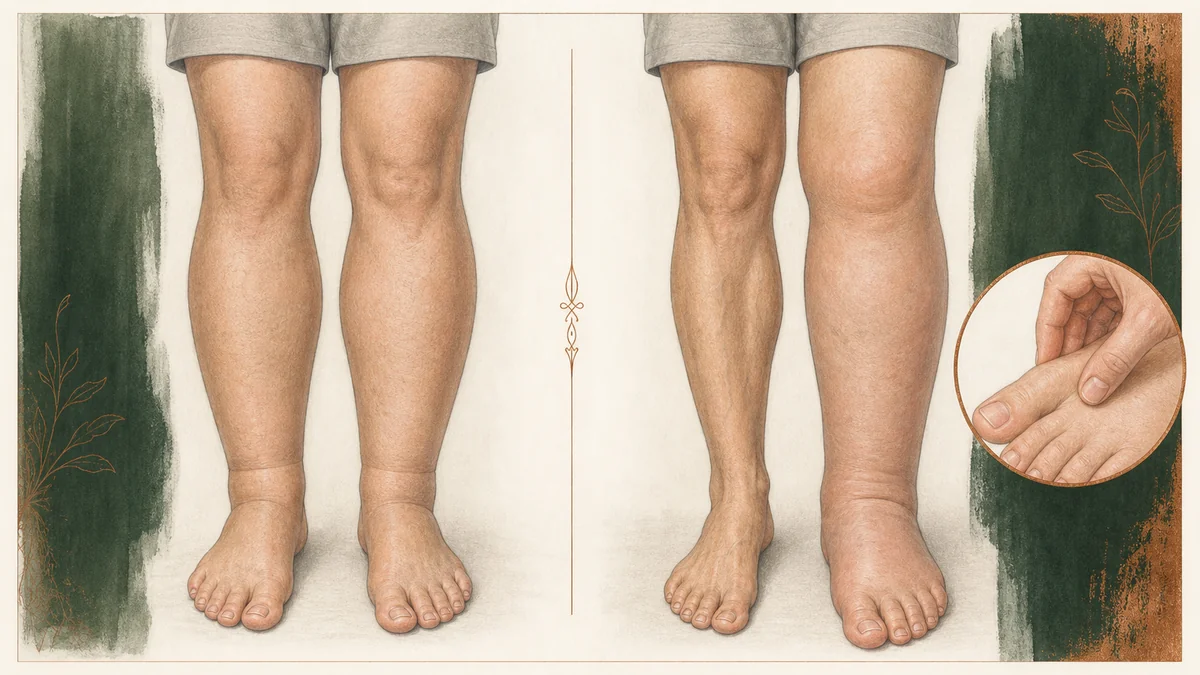
Lipedema vs lymphedema is one of the most consequential distinctions in this space, because treatment for one is not automatically right for the other. Both terms sound alike, get used interchangeably online, and are frequently mixed up even in early medical visits — but they are not the same condition.
This guide walks through what separates the two, including a clinical sign your doctor may check that most patients have never heard of. Nothing here is a diagnosis — only a clinician who examines you in person can sort out which condition (or combination) is present. See our is it lipedema? overview for the wider picture.
The Short Answer
Lipedema is a chronic disorder of fat tissue: the body deposits an abnormal, symmetrical amount of fat — usually in the legs, sometimes the arms — and, per Herbst et al.'s 2021 US standard-of-care guideline, that tissue becomes tender, prone to bruising, and resistant to diet and exercise.2 Lymphedema is a different mechanism: a problem with the lymphatic system's ability to drain fluid, causing protein-rich fluid to accumulate, most often in one limb.
Both can make a leg look larger and feel heavy — which is exactly why they get confused. But the underlying tissue differs — excess fat in one case, excess fluid in the other — and several physical signs below reliably separate them in most cases.
What Lymphedema Is
Lymphedema happens when the lymphatic system — the network of vessels that drains excess fluid from tissue back into the bloodstream — cannot keep up, either because it was never fully formed correctly (primary lymphedema) or because it was damaged by surgery, radiation, infection, or injury (secondary lymphedema). Fluid backs up in the affected limb, causing swelling that typically starts near the hand or foot and can worsen through the day.
Unlike lipedema, lymphedema very often affects just one limb, at least early on. It also tends to pit — press a finger into the swollen area and a dent remains — a sign uncommon in lipedema. Left untreated, stagnant lymph fluid raises the risk of skin infections in the affected limb.
Continue: What is lipedema? A closer look at causes and stages →Lipedema vs Lymphedema: Key Clinical Differences
The table below summarizes the clearest lipedema vs lymphedema differences. No single sign is diagnostic alone, but together they usually point clearly toward one condition or the other.
| Sign | Lipedema | Lymphedema |
|---|---|---|
| Symmetry | Bilateral, both sides affected similarly | Often unilateral, especially early on |
| Foot involvement | Usually spared — visible ankle "cuff" | Typically involved, including toes |
| Stemmer sign | Negative | Often positive |
| Pitting edema | Usually absent | Often present, especially early |
| Pain profile | Tender or painful to pressure | Usually not painful, may feel tight or heavy |
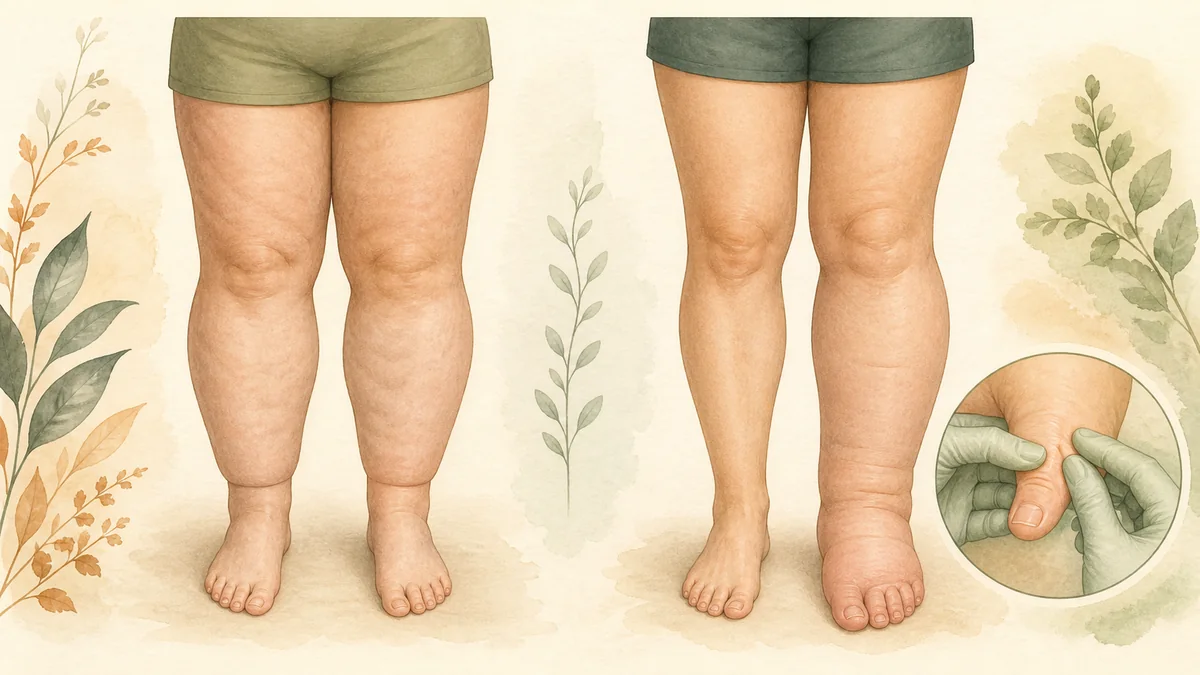
Symmetry & Foot Involvement
Lipedema is strikingly symmetrical — both legs or both arms enlarge to a similar degree. Lymphedema usually starts in a single limb, often traceable to lymph node removal, radiation, or injury. Lipedema classically spares the feet even as the legs above them enlarge, producing a visible "cuff" at the ankle, a pattern described in a 2025 PMC clinical review of lipedema.1 Lymphedema does the opposite: swelling commonly starts at the toes and foot and moves upward.
Stemmer Sign, Pitting & Pain
The Stemmer sign is a simple test: a clinician tries to pinch and lift a fold of skin at the base of the second toe. If the skin is too thickened to lift, the sign is positive — a classic bedside clue for lymphedema rather than lipedema, per a 2025 PMC clinical review.1 Lymphedema fluid frequently pits when pressed; lipedema tissue is generally non-pitting because the swelling is fat rather than free fluid.
Lipedema tissue is also frequently tender or painful when touched — Herbst and colleagues' 2021 standard-of-care guideline documents that tenderness and easy bruising are common lipedema features.2 Lymphedema is usually not painful early on; patients more often describe tightness or fullness. Pain on pressure is one of the more reliable clues pointing toward lipedema — also covered in our lipedema vs cellulite guide.
Lipo-Lymphedema: When Both Are Present
Lipedema and lymphedema are not mutually exclusive. As lipedema advances, enlarged fat tissue can compress and overload lymphatic vessels, triggering secondary lymphedema on top of existing lipedema — a combined state called lipo-lymphedema, and, according to a 2021 US standard-of-care guideline, more likely in later-stage lipedema.2 When present, the feet may begin to show involvement and pitting can appear alongside fat-tissue changes — one reason conservative management is recommended proactively rather than only after lymphatic symptoms appear. See our conservative care guide.
Why Getting This Right Changes Treatment
The two conditions are not managed identically. Lymphedema management centers on decongestive therapy — manual lymphatic drainage, compression bandaging, and long-term garments — aimed at moving fluid out and keeping it from re-accumulating. Lipedema management shares some tools, especially compression, but also addresses pain and the fat tissue itself, which does not respond to fluid-drainage techniques the same way. Surgical candidacy changes too: lymph-sparing liposuction is used cautiously in lipedema precisely because the lymphatic system must be protected — and that calculation shifts further if lymphedema is already present.
Who Diagnoses These Conditions
Both conditions are identified through a physical exam and medical history rather than a single lab test, though imaging or lymphatic function studies are sometimes used when the picture is unclear. Clinicians who see these regularly include phlebologists, vascular medicine specialists, lymphedema-focused therapists, and plastic surgeons experienced with lipedema. Evaluation generally relies on exam and history, with imaging reserved for unclear cases, per a StatPearls overview of lipedema.3 Our how lipedema is diagnosed guide walks through what a full evaluation involves.
Frequently Asked Questions
-
Can you have lipedema and lymphedema at the same time?
Yes. When lipedema is advanced or long-standing, the enlarged tissue can eventually overload the lymphatic system enough to trigger a secondary lymphedema on top of it — a combined condition often called lipo-lymphedema. It's one reason lipedema shouldn't be left unmanaged for years. Our treatment options guide covers how conservative care helps protect lymphatic function over time.
-
What is the Stemmer sign, and does lipedema cause it?
The Stemmer sign is a simple bedside test: a clinician tries to pinch and lift a fold of skin at the base of the second toe. If they can't, the sign is positive and points toward lymphedema, not lipedema. Lipedema on its own typically produces a negative Stemmer sign, since the feet are usually spared. See our pinch test guide for a related at-home check clinicians also use.
-
Does lipedema affect the feet?
Generally, no. One of lipedema's more recognizable features is that it spares the hands and feet even as the legs or arms above them enlarge, creating a visible "cuff" at the ankle or wrist. Lymphedema, by contrast, commonly does involve the feet and toes. If your feet are swollen along with your legs, that detail is worth mentioning specifically when you're evaluated — see our lipedema vs cellulite guide for other distinguishing signs.
-
Is lymphedema more serious than lipedema?
Neither condition is inherently "worse" — they're just different, and both deserve proper management. Untreated lymphedema carries a real risk of skin infections (cellulitis) because stagnant lymph fluid is a poor environment for the immune system. Untreated lipedema tends to progress gradually and can eventually contribute to lymphatic overload. Both benefit from early, appropriate conservative care rather than a wait-and-see approach.
-
Can lymphedema cause swelling that looks like lipedema?
It can look similar at a glance, which is part of why the two get confused. But lymphedema swelling is usually one-sided or asymmetric at first, pits when pressed, and involves the feet — patterns that differ from lipedema's bilateral, non-pitting, foot-sparing presentation. Our guide on how lipedema is diagnosed explains the fuller evaluation clinicians use to sort this out.
-
How do doctors tell lipedema and lymphedema apart?
Mainly through a physical exam and history rather than a single test: checking symmetry, the Stemmer sign, whether the feet are involved, whether the tissue pits under pressure, and the pain pattern. Some cases also involve imaging or lymphatic function studies when the picture is unclear. A clinician experienced with both conditions, sometimes alongside a certified lymphedema therapist, gives the most reliable read — see our is it lipedema? overview for related signs.