Evidence-Based
Every medical claim cites peer-reviewed sources: PubMed/NCBI, NIH-hosted clinical references, and standard-of-care consensus documents. No anecdotes dressed as facts.
Ch. 00 An Independent Guide
An independent guide for people trying to understand lipedema — a chronic, underdiagnosed fat-tissue disease — and awake/tumescent liposuction, one of the treatments used for it. We don't diagnose, we don't perform surgery, and we don't rank or recommend clinics.
This site covers two connected subjects: lipedema, a chronic fat-tissue condition that is frequently misdiagnosed, and awake (tumescent, local-anesthesia) liposuction, one of the surgical approaches used when lipedema is treated operatively. We cover lipedema as a condition in full and awake liposuction as a technique in full — because the people searching for one usually need to understand the other.
Most readers arrive with one of two questions: "Is what I'm seeing in my body lipedema, or something else?" — or "What does awake liposuction actually involve?" Both paths are covered in full, along with anesthesia, conservative care, and the day-to-day reality of living with a chronic condition.
The signs that separate lipedema from cellulite, lymphedema, and ordinary weight gain — and what to bring to a clinician. This page can't diagnose you.
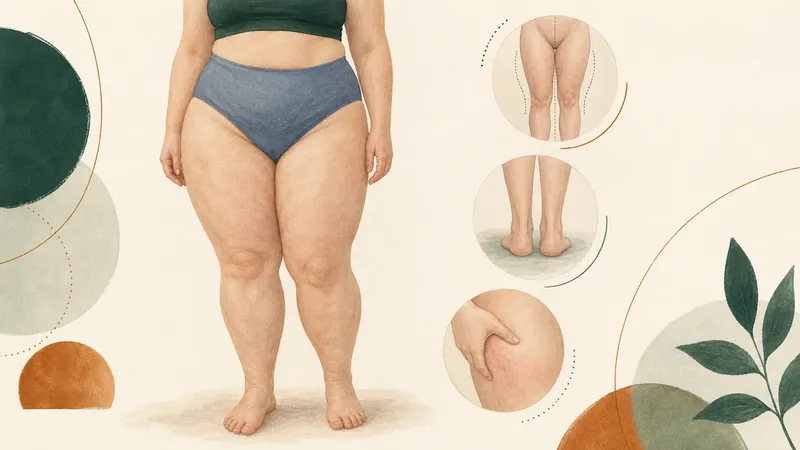
What lipedema is, why it happens, how it's staged, and how it affects the legs and arms — grounded in peer-reviewed literature.
What Is Lipedema? · Stages 1–4 · CausesThere is no cure. Treatment controls symptoms and slows progression — compression, MLD and movement before surgery is ever considered.
Conservative Care · Lipedema Surgery · Cure ClaimsLocal/tumescent anesthesia, sometimes with light sedation. What "awake" really means, how it feels, and when it isn't the right choice.
Tumescent Technique · For Lipedema · LimitsMAC, "twilight," conscious sedation, local vs general — the terminology is genuinely confusing. We untangle it clearly.
Options Compared · MAC · Does It Hurt?Compression garments, manual lymphatic drainage, movement that helps, and what to do when a clinician doesn't take your symptoms seriously.
Compression · Lymphatic Drainage · Being Dismissed
Lipedema is a chronic fat-tissue disease that almost exclusively affects women, and it is frequently mistaken for ordinary weight gain or cellulite for years before it's recognized. Pain on pressure, symmetry, and a sharp "cuff" at the ankles and wrists are the clearest signs that separate it from both.
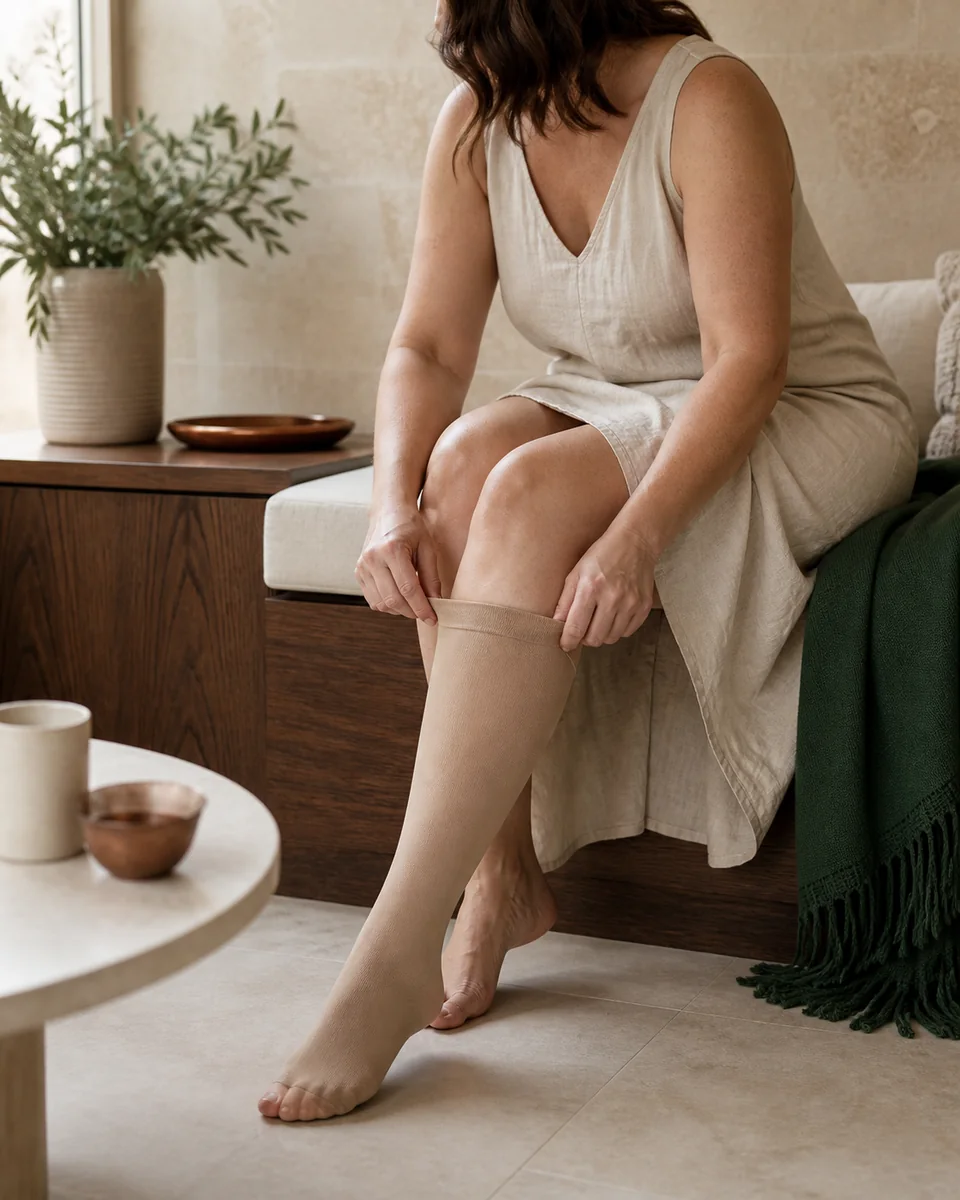
There is no cure for lipedema — treatment aims to control symptoms and slow progression, not eliminate the disease. Compression, manual lymphatic drainage, and movement are the foundation of care, and they matter before and after any surgical decision, not instead of it.
| Approach | What It Targets | When It's Used |
|---|---|---|
| Compression therapy | Swelling, comfort | Ongoing, first-line |
| Manual lymphatic drainage | Fluid buildup, comfort | Ongoing, first-line |
| Movement & low-impact exercise | Mobility, lymphatic flow | Ongoing, first-line |
| Surgery (lymph-sparing liposuction) | Diseased fat tissue burden | After conservative care, by stage/symptoms |
"Awake" means local or tumescent anesthesia, sometimes with light sedation — never general anesthesia. It's often preferred for lipedema surgery because it allows position changes and patient feedback during a typically multi-session procedure. It is not automatically safer, and it isn't right for every case.
Lipedema is a medical condition, not a cosmetic question — so this site holds itself to a high bar. Here's exactly how we work, and how you can hold us to it.
That standard shapes every part of the site, not just the flagship comparison pages. A page on compression garments is held to the same sourcing bar as a page on surgical technique, because both carry real consequences if the information is wrong or oversimplified. Clinical claims are sourced and linked. How that process works is explained on our editorial review policy page.
Every medical claim cites peer-reviewed sources: PubMed/NCBI, NIH-hosted clinical references, and standard-of-care consensus documents. No anecdotes dressed as facts.
Nothing on this site tells you whether you have lipedema. Symptom and self-check content is framed as findings to discuss with a clinician — never a verdict.
We're not a clinic. We don't perform surgery, and we don't rank, rate, or recommend specific clinics or surgeons. Read our funding model.
Our editorial standards, sourcing rules, and what we do and do not claim about clinical review are publicly documented on our editorial review policy page.
What the guideline says about tenderness and bruising, and the conservative tools that help.
What the evidence says about home treatments, devices, supplements and diets.
Thin upper body, heavy legs, and why doctors miss it.
The consciousness spectrum, explained plainly.
Why it's called "twilight," and what that actually means.
How to prepare, and how to ask for a referral or second opinion.
Keep reading
No upsells, no pop-ups, no clinic funnels — just the guide.
A research-backed, printable checklist covering the clinical signs of lipedema, how it differs from cellulite and lymphedema, and questions to ask at your evaluation — everything you need before your appointment.
Printable symptom checklist to bring to your doctor.
The checklist is on its way. We also send occasional research-backed lipedema guides — no clinic promotions, ever.