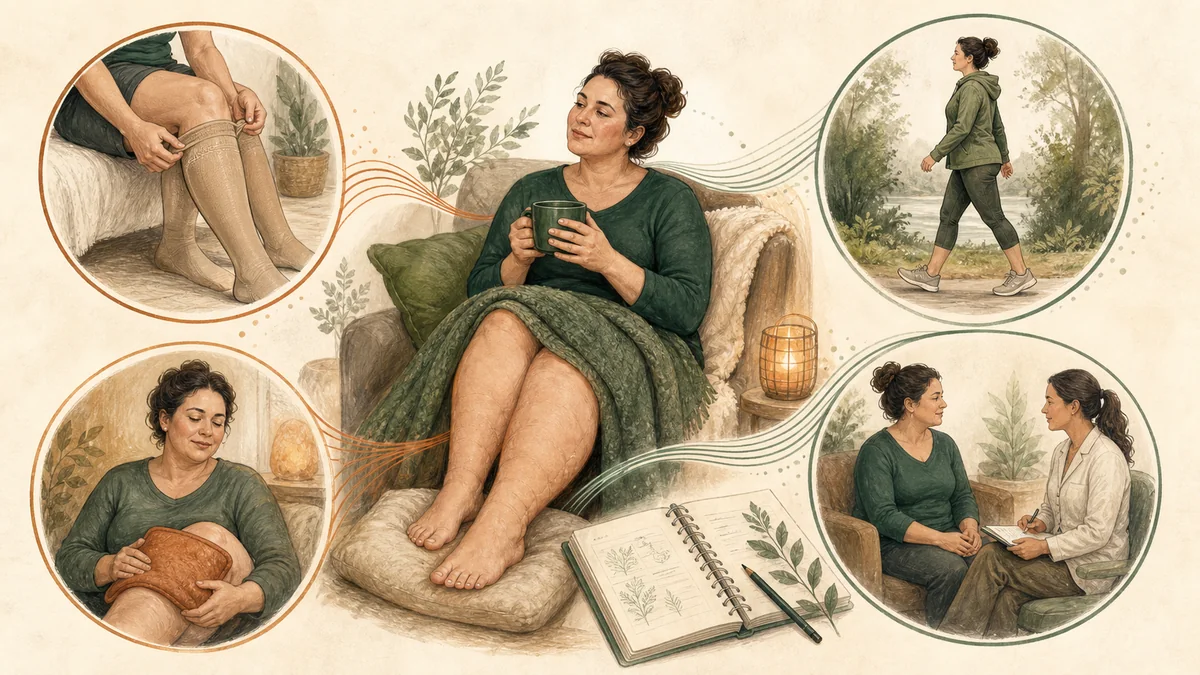
Lipedema pain management starts from a simple premise: lipedema pain is real, common, and often underestimated by people who haven't experienced it — tenderness to light pressure, aching heaviness, and pain that builds through the day are core features of the condition, not something to push through silently. It's a clinical sign, not something imagined or exaggerated, and it deserves a real management plan rather than being minimized. This guide focuses specifically on practical, everyday pain management: what to actually do, not why the pain happens in the first place. For the underlying mechanisms — why lipedema tissue hurts the way it does — see our guide on why lipedema hurts.
If you've had pain dismissed or minimized by a clinician in the past, you're far from alone — that experience is common enough among people with lipedema that we've written a dedicated guide on it. See when doctors don't believe you for guidance on being taken seriously and finding a clinician who takes lipedema pain seriously from the start.
Why Lipedema Pain Management Takes More Than One Approach
There's no single treatment that reliably resolves lipedema pain on its own. The standard-of-care consensus for lipedema management in the US recommends a combination of manual therapies, compression, and movement as the foundation of symptom management, rather than any one intervention in isolation.1 In practice, that means most people who get meaningful pain relief are using several strategies together and adjusting the mix over time as symptoms change.
Compression and Manual Lymphatic Drainage
Compression and manual lymphatic drainage (MLD) are two of the most consistently recommended tools for lipedema pain, and they work on a similar principle: reducing fluid congestion and supporting tissue, which in turn tends to ease the heaviness and tenderness many people describe, per a clinical review of lipedema features, diagnosis, and management.3 Neither reduces lipedema fat tissue itself, but both can make a meaningful difference in daily comfort. Many people use both together — compression for consistent daily support and MLD sessions on a more periodic schedule — rather than choosing one over the other. Our dedicated guides cover each in depth — see compression garments for lipedema and manual lymphatic drainage for lipedema for practical detail on getting started with each.
Continue: Compression garments for lipedema →Movement and Pacing
Both too little movement and pushing through pain can make lipedema symptoms feel worse — the goal is finding a sustainable middle ground. Gentle, low-impact movement supports lymphatic flow and joint mobility, while pacing means building activity gradually and backing off when pain flares rather than powering through on principle. A randomized controlled trial comparing several conservative approaches found that combining decongestive therapy — which includes MLD and compression — with an exercise program produced significantly greater improvements in pain scores than exercise alone.2 Our exercise guide covers specific low-impact options and how to pace them.
Heat and Cold
Both heat and cold are commonly used for lipedema discomfort, and which one helps more tends to be individual. Some people find cold packs reduce the achy, heavy sensation after a long day on their feet; others prefer warmth to ease stiffness or muscle tension around affected areas. Because heat can increase swelling in some people, it's reasonable to try both cautiously in shorter sessions first and pay attention to how your body actually responds, rather than assuming one option is universally better.
Over-the-Counter Approaches and When Medication Needs a Clinician
Some people use over-the-counter pain relief for lipedema discomfort as part of their broader management plan. This guide isn't the place to recommend specific medications, doses, or frequencies — that depends on your individual health history, other medications, and how your body responds, and it's a conversation for a clinician rather than a generic guide. If you find yourself needing pain relief regularly rather than occasionally, that's a meaningful signal worth raising with your clinician, since it may point to a need for a more complete management plan rather than ongoing reliance on medication alone.
The same principle applies to any prescription pain management. If non-drug approaches — compression, MLD, movement, pacing — aren't providing enough relief, that's worth discussing directly with your clinician rather than managing pain in isolation. A clinician who takes lipedema seriously will treat persistent pain as a legitimate reason to revisit your overall plan, not something to simply tolerate.
Sleep Positioning
There isn't one correct sleep position for lipedema, but many people find some relief from slightly elevating their legs, using pillows to reduce direct pressure on tender areas, or avoiding positions that compress affected tissue for extended periods overnight. What feels better varies by which areas are affected and by individual preference — it's worth experimenting with small adjustments rather than assuming a specific setup is required or that discomfort at night is simply something to accept.
Flare-Up Strategies
Pain flares — periods where symptoms are noticeably worse than your baseline — are common in lipedema, and having a general plan for them can reduce how disruptive they feel. During a flare, many people find it helpful to scale back activity temporarily rather than push through, prioritize compression and rest, lean on whichever of heat or cold works for them, and elevate affected limbs when possible. Tracking what seems to trigger flares — prolonged standing, heat, travel, hormonal changes, air travel, or a change in routine — can also help you anticipate and plan around them over time, rather than being caught off guard each time one happens.
It also helps to have a low-effort version of your usual routine ready for flare days — a lighter compression option, a shorter walk instead of your usual workout, or a heating pad and elevated legs instead of a full evening routine. Treating a flare as a temporary, manageable dip rather than a failure of your overall plan tends to make the whole experience less discouraging. A flare that's unusually severe, doesn't respond to your usual strategies, or comes with new symptoms like significant swelling, skin changes, or fever is a reason to contact your clinician rather than waiting it out.
Keeping a simple symptom log — even a few notes on your phone — can turn flares from unpredictable events into patterns you can plan around. You might track pain intensity, which areas feel worst, how long the flare lasted, and what seemed to help or make it worse. Over time, patterns may emerge around travel, hormonal changes, weather, or activity.
That practical self-knowledge can help you plan rest, compression, or lighter routines around predictable triggers rather than reacting afterward. It also gives your clinician concrete information to work with when revisiting your overall plan, instead of trying to reconstruct a vague recent history during a short appointment.
Frequently Asked Questions
-
What helps lipedema pain the most?
There's no single best approach — most people manage lipedema pain with a combination of compression, movement, manual lymphatic drainage, and everyday strategies like heat, pacing, and rest around flares. What works best varies by person and stage. Our guide on why lipedema hurts covers the underlying mechanisms, while this guide focuses on the practical, day-to-day side of managing pain.
-
Can I take over-the-counter pain relievers for lipedema pain?
Some people use over-the-counter pain relievers for lipedema discomfort, but whether that's appropriate for you, which option, and at what dose depends on your health history, other medications, and how often you'd need to use it — that's a conversation for your clinician, not something this guide can respond to generically. If you find yourself needing pain relief regularly, it's worth discussing a more complete management plan with a knowledgeable clinician rather than relying on medication alone.
-
Does heat or cold work better for lipedema pain?
Both are used, and which helps more is individual. Some people find cold packs reduce the achy, heavy sensation after a long day, while others prefer warmth for stiffness or muscle tension around affected areas. Since heat can also increase swelling for some people, it's worth trying both cautiously and noticing which your body responds to better, rather than assuming one is universally correct.
-
Why does lipedema pain get worse at the end of the day?
Many people notice lipedema pain and heaviness build throughout the day, especially after standing or sitting for long periods, likely related to fluid accumulating in affected tissue over time. This is one reason compression, movement breaks, and elevating your legs in the evening are commonly recommended — see our compression garments guide for more on how compression fits into a daily routine.
-
How should I sleep to reduce lipedema pain?
There's no single correct sleep position for lipedema, but many people find some relief from slightly elevating their legs, using pillows to reduce pressure on tender areas, or avoiding positions that compress affected tissue for long periods. What's comfortable varies by individual and by which areas are affected, so it's worth experimenting rather than assuming a specific position is required.
-
What should I do during a lipedema pain flare?
During a flare, many people find it helpful to scale back activity temporarily, prioritize compression and rest, use whichever of heat or cold works for them, and avoid pushing through significant pain. If a flare is unusually severe, doesn't improve with your usual strategies, or comes with new symptoms, that's a reason to contact your clinician rather than waiting it out — see our guide on finding a knowledgeable clinician if you don't currently have one.