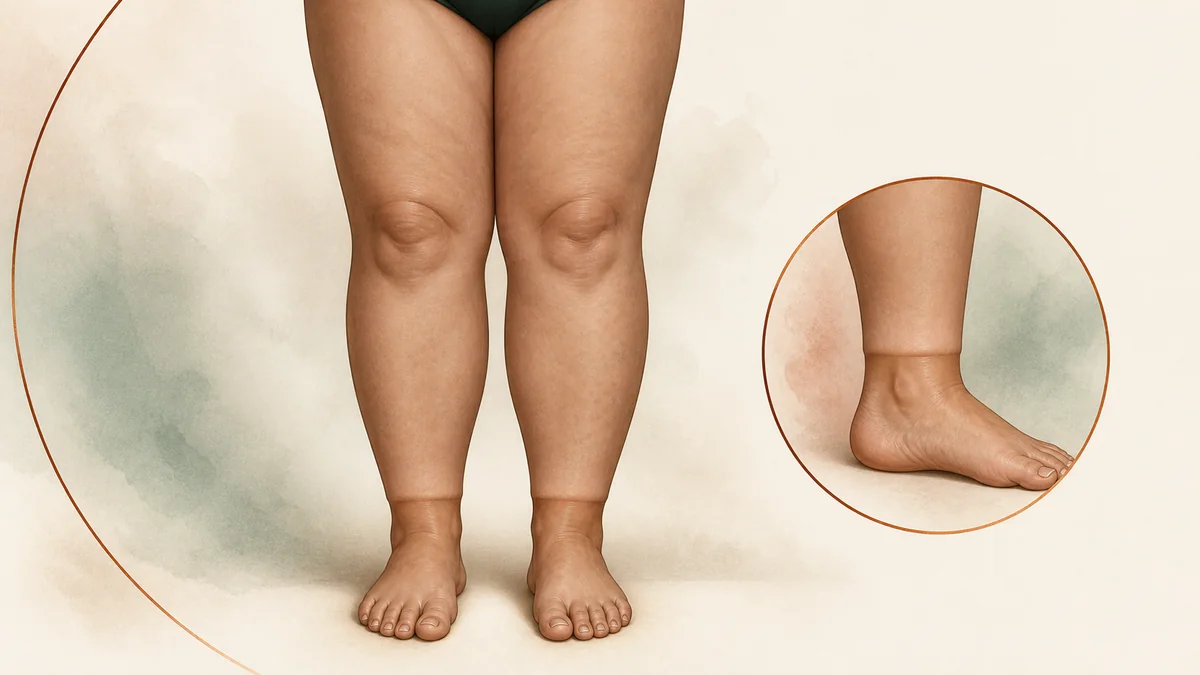
How lipedema is diagnosed differs from conditions confirmed by a single lab value or scan. Clinicians identify a pattern across history and physical examination, which can feel less definitive than the one-test answer many people expect.
This guide walks through what a clinical evaluation for lipedema actually involves, which specialties are most likely to recognize it, and how to prepare so an appointment is as productive as possible. For the broader question of whether your symptoms sound like lipedema at all, start with our is it lipedema? overview.
How Lipedema Is Diagnosed Clinically
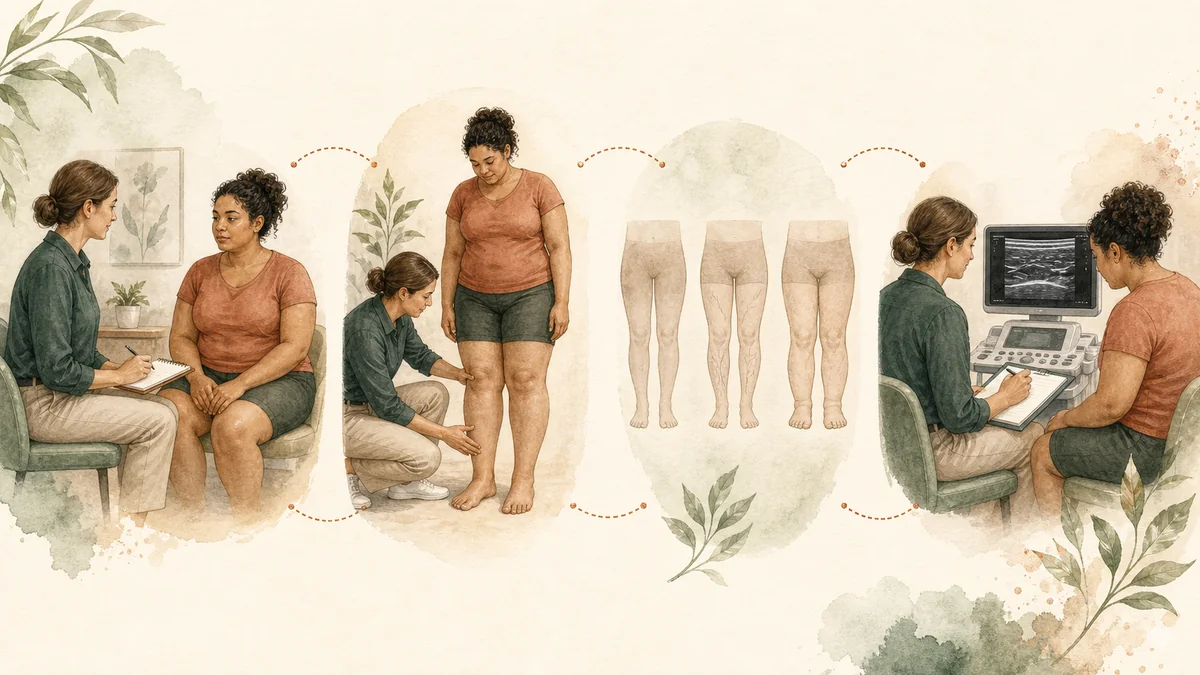
Lipedema is diagnosed clinically — meaning a clinician reaches a conclusion based on your reported history and what they find on physical examination, not from a single definitive test, according to a 2021 US standard-of-care guideline.2 This is common for a number of conditions where the diagnosis rests on a recognizable pattern rather than a biomarker, but it can feel unsatisfying to patients who expect a test result to settle the question.
Imaging — ultrasound, MRI, or other scans — is sometimes used during an evaluation, but, per a 2025 PMC clinical review of lipedema, its role is usually to help rule out other conditions that can look similar, not to confirm lipedema on its own.1 A thorough history and hands-on exam remain the core of how lipedema is actually recognized.
Clinical reference resources used to train clinicians, including a StatPearls overview of lipedema, describe lipedema's evaluation the same way: a recognizable constellation of physical findings and patient-reported symptoms, cross-checked against other possible causes, rather than a single confirmatory result.3 That's a different process than many patients expect walking in, and knowing that in advance can make the visit feel less like a dead end when no single test is ordered.
What a Clinician Assesses
During an evaluation, a clinician familiar with lipedema typically checks several specific things together, rather than relying on any single finding:
- Distribution — where the enlargement is (legs, arms, or both) and whether it follows a lipedema-typical pattern.
- Symmetry — whether both sides of the body are affected to a similar degree.
- The ankle/wrist cuff sign — whether the hands and feet are spared while the limbs above are enlarged.
- Tissue texture and pain — whether the tissue feels nodular and whether it's tender when pressed.
- Family history — whether close relatives have a similar pattern.
Together, these findings build a picture that's far more reliable than any one sign alone, which is also why a proper evaluation takes real time and can't be replaced by a quick glance or a photo sent for informal opinion.
Continue: Lipedema vs cellulite — the same signs explained →Ruling Out Other Causes
Because several conditions can cause leg or arm swelling, part of a lipedema evaluation involves ruling out — or identifying alongside it — other possible explanations:
| Condition | Distinguishing feature |
|---|---|
| Lymphedema | Often involves the feet; pitting swelling that leaves an indentation |
| Venous insufficiency | Swelling worsens through the day, skin changes near the ankle, varicose veins |
| Obesity-related fat gain | Generally not painful; responds at least partly to weight change |
| Thyroid or other metabolic conditions | Different symptom pattern; confirmed with blood work |
It's also possible to have lipedema alongside one of these conditions — for example, lipedema that has progressed to involve lymphatic changes is sometimes described separately as lipo-lymphedema. A clinician sorts through this combination during the evaluation rather than assuming it's strictly one thing or another.
This differential process is one reason a proper evaluation takes real time. A clinician isn't just confirming lipedema — they're actively checking whether your specific combination of symptoms is better explained by something else, partly explained by something else, or fully consistent with lipedema alone. Rushing this step, or skipping it because a patient already suspects lipedema from their own reading, is part of why misdiagnosis remains a documented problem in this condition.
Which Specialties See Lipedema
No single medical specialty is formally designated as "the" lipedema specialty in the US, which contributes to inconsistent recognition. In practice, the clinicians most likely to have real experience with lipedema include phlebologists and vascular specialists (who routinely evaluate leg swelling), lymphedema-trained physical or occupational therapists working alongside a physician, and some plastic surgeons who specifically treat lipedema surgically. Primary care physicians can diagnose lipedema too, but familiarity varies widely from one practice to another.
This fragmentation across specialties is itself a big part of why patients bounce between providers before getting a clear answer — a dermatologist may focus on skin findings, a primary care doctor on weight and metabolic labs, and a vascular specialist on venous causes, without any one of them stepping back to consider the full lipedema pattern. Asking directly, at the start of an appointment, whether the clinician has evaluated lipedema before can save real time compared with working through the visit and finding out afterward.
How to Prepare for the Appointment
A short amount of preparation tends to make a real difference in how productive an evaluation is:
- Write a brief timeline of when symptoms started and whether they changed around puberty, pregnancy, or menopause.
- Note whether close relatives have a similar leg or arm shape.
- Take a few photos over time if you're tracking whether the pattern is stable or changing.
- Prepare specific questions — how the diagnosis is reached, whether imaging is needed in your case, and what conservative options exist.
- Ask about lipedema by name rather than only describing "leg swelling" or "heavy legs."
If you're searching for a "lipedema specialist near me," the most useful approach isn't picking whoever is closest — it's asking direct questions about a provider's training and experience with the condition before booking. This site doesn't name or rank individual clinicians, but our guide to finding a knowledgeable clinician walks through exactly what to ask and what red flags to watch for.
What to Do If You're Dismissed
Being told "you're just overweight" or "that's just how your body is" without a proper exam is unfortunately common, and it doesn't mean your symptoms aren't real. If that happens, asking directly for a referral to a specialist familiar with lipedema, or seeking a second opinion, is a reasonable and often necessary next step. Our guide on being taken seriously covers language that tends to work better in these conversations and how to advocate for yourself without escalating into conflict.
Frequently Asked Questions
-
What test diagnoses lipedema?
There isn't a single lab test or scan that diagnoses lipedema. Diagnosis is clinical, based on a detailed history and physical exam looking for symmetry, disproportion, the ankle/wrist cuff sign, tissue texture, and pain on pressure. Imaging is sometimes used to rule out other conditions, not to confirm lipedema on its own.
-
Which doctor should I see?
There's no single specialty that owns lipedema diagnosis in the US — phlebologists, vascular specialists, lymphedema-trained therapists working alongside physicians, and some plastic surgeons with lipedema experience are the clinicians most likely to recognize it. Our guide on finding a knowledgeable clinician explains how to evaluate a provider's actual experience rather than relying on their title alone.
-
Do I need an ultrasound or MRI?
Not necessarily. Imaging isn't required to diagnose lipedema itself, but a clinician may order it to rule out other causes of leg swelling, such as venous insufficiency or lymphedema, especially if the picture is mixed. Whether imaging is useful depends on your specific symptoms and exam findings.
-
How is lipedema told apart from lymphedema and obesity?
Clinicians look at specific distinguishing features: lipedema typically spares the feet with a visible ankle cuff and is tender to pressure, while lymphedema often involves the feet and pitting swelling, and obesity-related fat gain is generally not painful and responds at least somewhat to weight loss. A careful history and exam usually clarifies which pattern is present, as covered in our lipedema vs cellulite guide.
-
Is "lipedema specialist near me" a real search I should trust blindly?
Searching for a nearby specialist is a reasonable instinct, but location alone doesn't tell you whether a clinician has real lipedema experience. It's more useful to ask directly about a provider's training and case volume, and to bring documentation to your first appointment, than to assume proximity equals expertise — see our guide on finding a knowledgeable clinician for a vetting checklist.
-
What if my doctor doesn't know about lipedema?
It's common, especially outside specialties that regularly see the condition. If your primary doctor isn't familiar with lipedema, you can ask for a referral to a phlebologist, vascular specialist, or lymphedema-trained clinician, or seek a second opinion. Our guide on being taken seriously covers how to navigate that conversation.