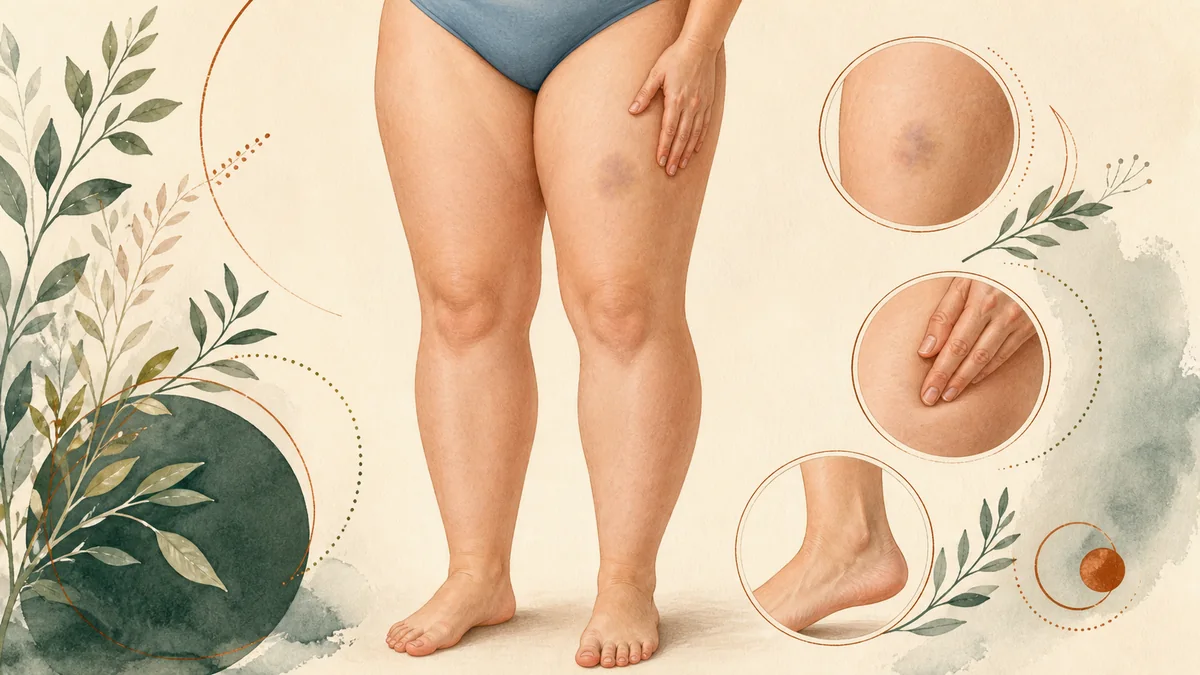
Lipedema tends to develop gradually, which means the earliest signs are often written off as normal body changes, weight fluctuation, or "just how my legs are." Recognizing the pattern means knowing what to pay attention to, instead of only asking "have I gained weight?"
This guide walks through when lipedema typically starts, the specific early signs worth noticing, and what to bring to a clinician if several of them sound familiar. For the full picture of how lipedema is identified overall, see our is it lipedema? overview.
When Lipedema Typically Starts
Lipedema most commonly becomes noticeable around a hormonal transition — Herbst et al.'s 2021 US standard-of-care guideline identifies puberty as the most frequently reported starting point, though it can also first appear or clearly worsen during pregnancy or in the years approaching menopause.1 This timing pattern is one of the reasons lipedema is believed to have a hormonal component, alongside a hereditary one, rather than being explained by diet or activity level.
Because these hormonal windows overlap with normal body change — growth spurts, pregnancy weight, perimenopausal shifts — early lipedema signs are easy to attribute to something else.
Researchers believe estrogen and other hormonal shifts interact with fat tissue in ways that may trigger or accelerate lipedema in people who are already predisposed to it, though a 2021 US standard-of-care guideline notes the exact mechanism is still an active area of study.1 That uncertainty doesn't change what's useful for patients to know: a new pattern of disproportion or tenderness that lines up with one of these life stages is worth paying attention to, rather than dismissing it.
The Early Signs
Several details in combination are worth noting before lipedema advances.
- New disproportion — legs (or arms) that seem to be growing out of proportion with the rest of the body, even without significant overall weight change.
- Tenderness to touch — areas that feel sore or achy when pressed, squeezed, or bumped, beyond what would be expected from ordinary fat.
- Easy bruising — bruises that appear without remembering an injury, often on the thighs or calves.
- A sense of heaviness — legs that feel disproportionately heavy or fatigued, especially by the end of the day or after standing.
- The feeling that "my legs don't match my body" — a common way patients describe noticing the disproportion before they have a name for it.
None of these signs on their own confirms lipedema, and this page can't diagnose you — but noticing two or more together is a reasonable trigger to ask a clinician about the condition specifically.
It's worth naming why these early signs so often get explained away: a standing job, a long flight, warm weather, or simply "growing pains" can all plausibly account for tired, achy, or slightly swollen legs on their own. The difference with early lipedema is that the pattern tends to persist and recur — the same symmetrical tenderness or disproportion shows up again and again, rather than resolving once the obvious trigger (the flight, the shift on your feet) has passed.
Continue: Lipedema vs cellulite — how to tell the difference →What Stage 1 Can Look Like
In the earliest stage, the skin surface over affected tissue can still look completely smooth, with no visible dimpling or texture change — which, per a StatPearls overview of lipedema, is a major reason Stage 1 lipedema is so often missed by patients and clinicians alike.2 The tissue underneath may already feel softer or slightly nodular on close examination, even when nothing looks unusual at a glance. Our lipedema stages guide explains how the condition is staged and, importantly, that staging reflects tissue change over time — not how much pain a person feels.
Why Early Recognition Matters
Catching lipedema earlier doesn't change the fact that there's no cure, but it does change what's available. Conservative management — compression, manual lymphatic drainage, and appropriate movement — tends to be most effective when it starts before the tissue has progressed significantly, and early recognition simply gives that approach more time to work. None of this is about creating pressure or urgency; it's about making sure the option is on the table sooner rather than later.
Progression in lipedema isn't automatic or the same for everyone — some people remain relatively stable for years with good conservative care, while others notice change more quickly, particularly around another hormonal shift. What's consistent across the research is that patients who are recognized and supported earlier tend to have more tools available for managing pain and mobility over time, which is a meaningfully different starting point than reaching a clinician for the first time after years of unexplained symptoms.
Family History as a Clue
Lipedema frequently appears in more than one family member — a mother and daughter, or several sisters, with a similar leg or arm shape. This hereditary pattern is one of the pieces of evidence supporting a genetic component to the condition, and it's a detail worth actively noting rather than assuming it's "just how the women in my family are built."
Ask relatives directly whether they've experienced tenderness, easy bruising, or a sense that their legs or arms are disproportionate to the rest of their body — not just whether their legs "look similar" to yours. Many family members share the visual pattern without ever having discussed the pain or texture side of it, so a slightly more specific conversation can surface information that a quick glance at old photos wouldn't.
What to Bring to an Evaluation
If early signs sound familiar, a short amount of preparation can make an evaluation more productive:
- A brief timeline of when you first noticed disproportion, tenderness, or bruising, and whether it lined up with puberty, pregnancy, or another hormonal shift.
- A note on family members with a similar shape or history.
- Specific descriptions — "tender when pressed," "bruises without a bump" — rather than general phrases like "heavy legs."
- A direct question: "Could this be lipedema?" asked by name, rather than only describing symptoms.
A full evaluation is clinical, based on history and physical exam rather than a single test. Our how lipedema is diagnosed guide explains exactly what that process involves and which specialists are most likely to recognize it early. If you're not overweight and worried that will count against you being taken seriously, our guide on lipedema in slim people addresses that concern directly.
Frequently Asked Questions
-
At what age does lipedema start?
Lipedema most often starts or becomes noticeable around a hormonal shift — typically puberty, though it can also emerge or worsen during pregnancy or the approach to menopause. This pattern points to a hormonal component, but the exact age varies widely between individuals, and some people don't notice symptoms until adulthood.
-
Is easy bruising a sign?
Yes. Bruising that appears without a clear cause is a commonly reported early sign of lipedema, thought to relate to fragile small blood vessels in the affected tissue. On its own it isn't specific to lipedema, but combined with disproportionate swelling and tenderness, it's a detail worth mentioning at an evaluation.
-
Can lipedema be caught early?
Yes, though early-stage lipedema can be subtle since the skin surface may still look smooth. Recognizing the pattern early — disproportion, tenderness, easy bruising — and raising it with a clinician gives access to conservative management sooner, which is discussed further in our guide on lipedema stages.
-
Does lipedema run in families?
It often does. Many people with lipedema have a mother, sister, or other close relative with a similar leg or arm shape, which points to a hereditary component alongside the hormonal triggers. Family history is one of the details clinicians ask about during an evaluation and is worth noting ahead of an appointment.
-
What's the difference between early signs and being overweight?
Ordinary weight gain tends to be more evenly distributed and responds, at least somewhat, to diet and exercise. Early lipedema signs are different: a symmetrical, disproportionate pattern in the legs or arms that doesn't shift much with weight change, often paired with tenderness that plain fat gain doesn't cause. Our guide on lipedema in slim people covers this distinction in more depth.
-
Should I be worried if I notice early signs?
Noticing early signs is useful information, not a reason for alarm. Lipedema is a manageable chronic condition, and recognizing it earlier simply means conservative options like compression and movement can start sooner. The next step is a clinical evaluation, not self-diagnosis or worry.