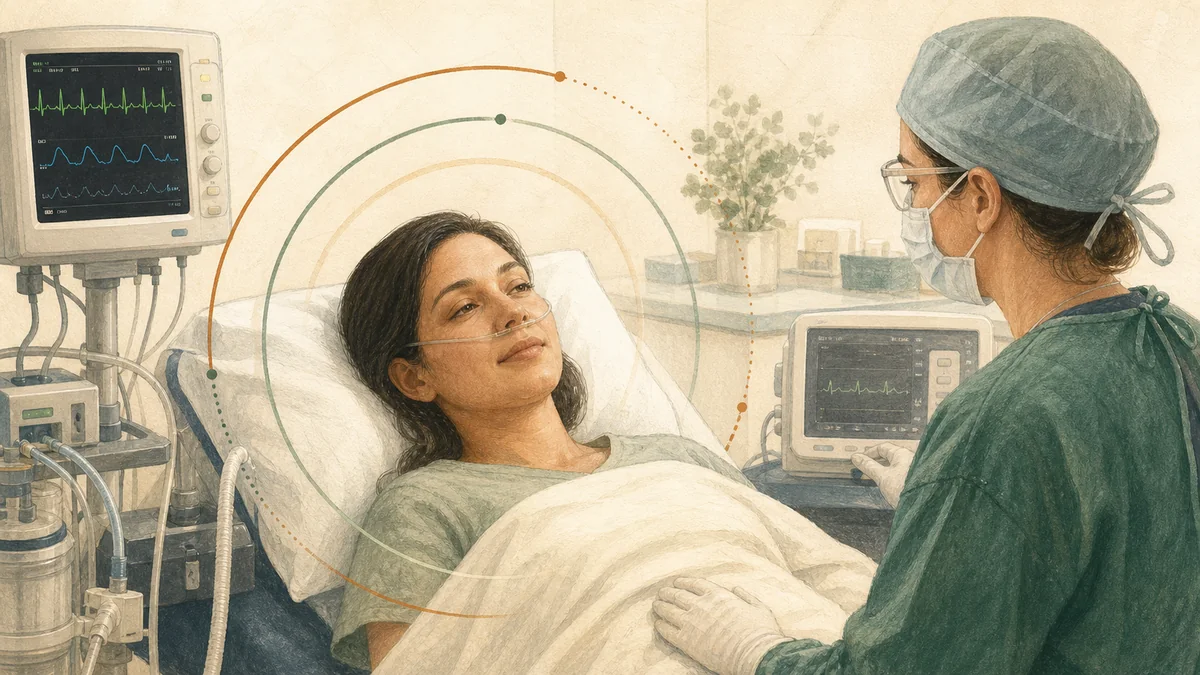
"Twilight sedation for liposuction" is a phrase many patients encounter but few can define precisely — and the vague, dreamy connotation of the word doesn't help. This guide explains what actually happens during twilight sedation, honestly answers whether you'll talk or remember anything, and walks through its real risk profile. If you're weighing this specifically against general anesthesia, or want to understand the clinical terminology behind "twilight," our MAC anesthesia guide is the deeper companion piece to this one.
What "Twilight" Means
"Twilight sedation" is patient language, not a formal clinical term. It describes the hazy, in-between feeling of being sedated but not fully unconscious — neither wide awake nor completely asleep, much like the dim light of dusk the name evokes. The clinical term for the underlying care model is Monitored Anesthesia Care (MAC): a dedicated anesthesia provider monitoring you continuously and adjusting your sedation level as the procedure requires, per Das and Ghosh's overview of monitored anesthesia care.1 Our full MAC anesthesia explained guide covers that clinical model from the provider's side; this page focuses on the patient experience.
What It Feels Like
Most patients describe twilight sedation as a pleasant, floaty drowsiness — a sense of being relaxed and somewhat detached from what's happening, without the total blankness of general anesthesia. Time perception is commonly affected: many patients report that a procedure lasting an hour or more felt like it took only a few minutes. Some patients drift into what feels like light sleep for stretches of the procedure, while others stay more alert throughout, depending on how their individual sedation is titrated.
Because sedation depth is actively adjusted throughout the case, the experience isn't always uniform from start to finish — you might feel more alert during a less stimulating part of the procedure and drowsier during a more involved step. This is a normal, expected part of how MAC-based twilight sedation actually works.
Anxiety before the procedure often eases noticeably once the sedative takes effect, which is one of the main reasons patients choose this option over staying fully alert with only local anesthesia. Some people describe a pleasant, warm heaviness settling in within minutes of the medication starting; others notice the effect more gradually. Neither pattern is unusual, and the anesthesia provider is watching for your individual response rather than expecting a fixed timeline.
Do You Talk? Will You Remember?
Honestly: it depends, and there's no guarantee either way. Some patients respond to questions, follow simple instructions, or even hold brief conversations during lighter moments of sedation. Others are quiet and unresponsive throughout. Memory afterward is similarly variable — some people recall isolated moments or sounds, some remember very little beyond arriving and waking up, and a smaller number recall more of the procedure than they expected.
What twilight sedation does not offer is a guarantee of complete amnesia, which is a meaningfully different promise than general anesthesia makes. If having zero memory of the procedure matters a great deal to you, that's worth discussing directly with your anesthesia provider beforehand rather than assuming twilight sedation will automatically deliver it.
Common Medications Used
Twilight sedation typically involves a combination of sedative and anti-anxiety medications, sometimes alongside a short-acting pain reliever, administered and adjusted by the anesthesia provider throughout the procedure. This section is general and educational only — the specific medications, combinations, and doses used are a clinical decision made by your anesthesia provider based on your health, the procedure, and how you respond in real time, and this page does not provide dosing guidance of any kind.
It's also worth repeating a distinction covered above: the sedative component of twilight sedation manages anxiety and consciousness level, but it is not typically what blocks pain. For body procedures, pain control usually comes from a separate local or tumescent anesthetic delivered directly to the treatment area, working alongside the sedation rather than replacing it.
If you take regular medications, have allergies, or have had an unusual reaction to sedation or anesthesia in the past, telling your anesthesia provider ahead of time — not just your surgeon — is one of the most useful things you can do to help them plan safely. This kind of history often shapes which medication categories are chosen and how closely certain responses are watched during the procedure.
Continue: MAC anesthesia — the clinical care model behind twilight →Is It Dangerous? Risk Profile
For appropriately selected, healthy patients, twilight sedation carries a low overall risk — but "low risk" is not the same as "no risk," and it's worth being direct about that. Documented, uncommon risks include over-sedation that can affect breathing, allergic or adverse reactions to sedating medications, and rarely, the need to adjust the sedation plan mid-procedure if something changes, according to a review of monitored anesthesia care in and outside the operating room.2
What actually determines how safe a given twilight sedation experience is has less to do with the sedation depth targeted and more to do with two things: your individual health factors, and the quality and continuity of monitoring during the procedure. A well-monitored case with an appropriately trained anesthesia provider present throughout is the single biggest safety factor here — more so than which specific medications are used.
Twilight Sedation vs General Anesthesia
The core difference is depth and airway management: general anesthesia means full unconsciousness with your airway actively managed by the provider, while twilight sedation keeps you breathing on your own at a lighter, adjustable depth on the same minimal-to-general sedation continuum clinicians use to describe the full range, per a StatPearls overview of procedural sedation.3 Recovery also differs — twilight sedation typically involves a shorter, lighter grogginess period compared with the longer recovery window often associated with general anesthesia.
Neither option is inherently "safer" in every situation; the right choice depends on the procedure's length and scope, your health, and your own tolerance for anxiety versus depth of sedation. Our full local vs general anesthesia guide walks through how that decision actually gets made, and our anesthesia options compared page places twilight sedation alongside the full spectrum, including local and tumescent anesthesia.
Recovery After Sedation
Immediately after twilight sedation, expect grogginess, mild disorientation, and slowed reaction time for several hours — even once you feel like you've "woken up," your judgment and coordination may not be fully back to baseline. For this reason, you should not drive, operate machinery, sign important documents, or make significant decisions for the remainder of the day.
Arrange a companion in advance to drive you home and, ideally, to stay with you for the first few hours afterward. Plan to rest rather than resume normal activities, and expect clearer thinking to return gradually over the following hours rather than all at once.
Mild nausea, dizziness, or a dry mouth are common and usually short-lived after twilight sedation; they typically resolve on their own within the day. If you experience severe dizziness, trouble breathing, chest pain, or confusion that isn't improving, that goes beyond ordinary post-sedation grogginess and warrants contacting your provider promptly rather than waiting it out.
Hydration and light, easily digestible food once nausea has settled tend to help the residual foggy feeling clear more quickly, though appetites vary widely in the hours after twilight sedation and there's no need to force meals if you're not hungry yet. Sleep in the first evening is generally deeper than usual, which is expected rather than concerning. Emotions can also feel slightly closer to the surface for a day or so, which is a well-recognized aftereffect of sedative medications rather than a sign anything has gone wrong, and it typically fades on its own without any intervention.
Frequently Asked Questions
-
Is twilight sedation safe?
For most healthy patients, yes, when it's administered and monitored by a qualified anesthesia provider — but no sedation is entirely without risk. Real, uncommon risks include over-sedation affecting breathing and reactions to medication, and safety depends more on the quality of monitoring than on the sedation depth itself; our MAC anesthesia guide covers what that monitoring actually involves.
-
Will I feel pain?
Twilight sedation itself is a sedative, not a pain blocker, so it's typically combined with a local or tumescent anesthetic that handles the pain-blocking part directly. Most patients report pressure or pulling sensations rather than sharp pain. Our anesthesia options compared guide explains how sedation and pain control are layered together during a procedure.
-
Will I remember anything?
It varies by person and by how deep the sedation reaches at any given moment — some patients remember fragments, some remember very little, and a few recall more than expected. There's no guarantee of complete amnesia with twilight sedation, unlike general anesthesia, and it's worth setting that expectation honestly before your procedure.
-
How long does it take to recover?
Most people feel groggy or foggy for a few hours immediately afterward, with clearer thinking typically returning within the same day, though this varies by individual and by how much sedation was used. Plan to rest for the remainder of the day rather than resuming normal activities right away — our MAC anesthesia guide covers what's actually being monitored during that window.
-
What's the difference between twilight sedation and MAC?
There isn't a real clinical difference — "twilight sedation" is the patient-facing term for what anesthesia providers call Monitored Anesthesia Care (MAC). MAC describes the care model itself: continuous monitoring plus adjustable sedation depth. Our MAC anesthesia guide explains the model in full, including who provides it and what's monitored.
-
Do I need someone to drive me home?
Yes. You should not drive, operate machinery, or make significant decisions for the rest of the day after twilight sedation, since residual grogginess and slowed reaction time can persist even once you feel mostly back to normal. Arrange a companion to take you home — our anesthesia options compared guide covers recovery expectations across every option on the spectrum.