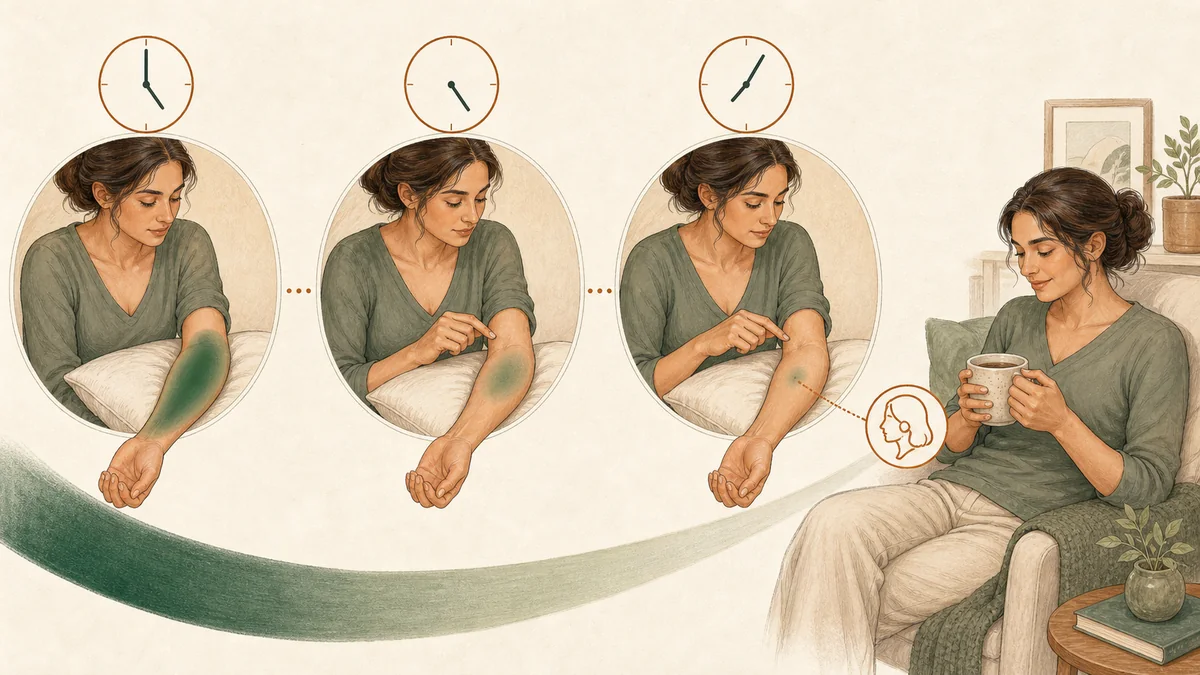
"How long does local anesthesia last?" comes up constantly for a good reason: knowing roughly when sensation will return helps you plan your day, recognize what's normal, and notice if something seems off. This page is deliberately narrow and focused — if you're trying to decide between local and general anesthesia in the first place, our local vs general anesthesia guide covers that broader decision. Here, we're answering the single question of duration in depth.
Below are the typical ranges reported for local anesthetics, the specific factors that push duration longer or shorter, what the fading process actually feels like, and when unusual numbness or early pain is worth a call to your provider.
Typical Duration Ranges
Local anesthetics as a category cover a wide span of durations. General clinical guidance places the range for local infiltration anesthesia anywhere from about 30 minutes on the short end to 12 hours or longer on the extended end, with the specific outcome depending on the agent used, its concentration, and the technique, according to a StatPearls overview of local and regional anesthesia.1
Shorter-acting agents used for quick, minor procedures tend to sit at the lower end of that range, while longer-acting formulations and techniques designed to prolong the effect — including the dilute, large-volume tumescent approach used in body-contouring procedures — extend well beyond a few hours. This is why it's not accurate to quote a single number for "how long local anesthesia lasts"; the honest answer is always a range tied to the specific technique.
Local anesthetics as a drug class also differ from one another by design. Some are formulated to act quickly and clear relatively fast, which suits short procedures where a quick return to normal sensation is desirable. Others are formulated specifically for a longer duration of action, which suits longer procedures or situations where extended post-procedure comfort is the priority. Neither category is inherently "better" — the right choice depends on what the procedure calls for, and that decision is made by your provider, not something patients need to specify themselves.
How Long Does Local Anesthesia Last? What Affects It
Several factors combine to determine how long any individual patient stays numb:
- The specific agent used — some local anesthetics are inherently shorter- or longer-acting than others based on their chemical properties.
- Dilution and technique — the tumescent method deliberately uses a very dilute anesthetic in large volume, which changes its absorption profile and extends its effect considerably compared with a small, concentrated injection, according to Klein and Jeske's research on tumescent lidocaine dosing.2
- Use of a vasoconstrictor — adding epinephrine narrows blood vessels at the injection site, slowing how quickly the anesthetic is carried away and meaningfully extending numbness, per Klein's original tumescent technique research.3
- Individual metabolism — how quickly your body processes and clears the anesthetic varies from person to person based on circulation, liver function, and other individual factors.
- The area treated — tissue with a richer blood supply tends to clear anesthetic faster than areas with less circulation, shortening the numb period there.
Why Tumescent Technique Lasts Longer
The tumescent approach — widely used in awake and minimally invasive body procedures — was specifically developed to extend both the safety and duration of local anesthesia over standard injection techniques. By combining a very dilute anesthetic with a vasoconstrictor and infusing it in large volume directly into the treatment area, the tumescent technique slows systemic absorption dramatically, which is part of why it both permits larger total anesthetic doses to be used safely and produces numbness that can persist well beyond what a concentrated, small-volume injection would provide, per Klein and Jeske's research on tumescent lidocaine dosing.2
Our tumescent technique guide explains how this approach works from the ground up, including why it became the foundation for awake body-contouring procedures.
Continue: Tumescent liposuction — the technique that made awake surgery possible →What Numbness Fading Feels Like
Numbness typically doesn't switch off like a light — it fades gradually and often unevenly across the treated area. Many people first notice a return of sensation as tingling, prickling, or a mild pins-and-needles feeling, usually starting at the edges of the treated zone before spreading inward as full feeling returns. Some patchiness during this transition — one small patch of skin feeling different from the surrounding area — is a normal part of the process rather than a sign of a problem.
It's worth distinguishing this anesthetic wear-off, which typically resolves within hours, from a separate and slower process: post-surgical nerve recovery. After procedures involving larger volumes of anesthetic or more extensive tissue work, some reduced sensation in the skin can persist for weeks or occasionally longer as small nerve endings heal, which is a different phenomenon from the anesthetic itself simply wearing off.
The subjective experience during the fade-out phase also varies more than most people expect. Some describe a heavy, thick, or rubbery feeling in the treated area as sensation begins to return, similar to the way a leg feels after sitting cross-legged too long. Others notice temperature perception coming back before touch — a cool draft or a warm palm feels distinct even while light pressure on the skin still registers as muffled.
Fine discrimination, like feeling the difference between two closely spaced points, often returns last, well after basic pressure and temperature are back to normal. None of this uneven, layered recovery of sensation is unusual; different nerve fiber types simply resume signaling on slightly different timelines. If the treated area feels tender or unusually sensitive as full feeling returns, that mild rebound sensitivity is also common and generally settles down on its own over the following hours as the tissue readjusts.
When to Be Concerned
Two patterns are worth flagging to your provider rather than waiting out:
- Numbness that persists far longer than what you were told to expect, especially if it's accompanied by weakness, unusual discoloration, or numbness spreading beyond the originally treated area.
- Pain breaking through noticeably earlier than the expected duration, particularly if it's significant or paired with swelling, redness, warmth, or fever — signs that could point to inflammation or a developing complication rather than ordinary anesthetic wear-off.
Neither of these situations is common, but both are straightforward to raise with your surgical team, and doing so promptly is always the safer choice over assuming it will resolve on its own. Keep in mind that your provider will typically tell you what duration to expect for your specific anesthetic and technique before your procedure — use that number, not a generic online range, as your actual reference point, and treat any significant deviation from it as worth a phone call. For the fuller picture of what pain and sensation should look like across your entire recovery — not just the anesthetic window — see our does liposuction hurt guide.
Frequently Asked Questions
-
How long does local anesthesia typically last?
General ranges reported for local anesthetics run from about 30 minutes up to 12 hours or more, depending on the specific agent, concentration, whether a vasoconstrictor is added, and how vascular the treated area is. Tumescent local anesthesia used in body procedures tends to sit toward the longer end of that range because of how it's diluted and administered. See our local vs general anesthesia guide for how this duration factors into the bigger anesthesia decision.
-
Why does tumescent anesthesia last longer than a regular injection?
The tumescent technique uses a large volume of very dilute local anesthetic combined with a vasoconstrictor, which slows how quickly the drug is absorbed into the bloodstream and keeps it in contact with local tissue longer. This is part of why the tumescent approach both extends numbness and allows larger total doses to be used safely compared with a standard concentrated injection. Our tumescent technique guide explains how this approach works in full.
-
Is it normal for numbness to fade unevenly?
Yes. Numbness typically fades gradually and unevenly rather than switching off all at once, often returning first as tingling or a pins-and-needles feeling at the edges of the treated area before spreading inward. Areas closer to the skin surface or with richer blood supply tend to regain sensation sooner than deeper tissue. This patchy return of sensation is expected and not a sign of a problem.
-
When should I worry about numbness lasting too long?
Some lingering reduced sensation for days to weeks after a procedure involving larger volumes of anesthetic is common and usually resolves on its own as small nerve endings recover. But numbness that persists well beyond what your provider described, especially if paired with weakness, discoloration, or spreading loss of sensation in a wider area than expected, is worth reporting rather than waiting out. See our does liposuction hurt guide for the broader pain and sensation timeline after surgery.
-
What if I feel pain before the numbness should have worn off?
Pain breaking through earlier than expected can simply mean the anesthetic is metabolizing faster than average for your body, which varies between individuals. It can also signal inflammation or, less commonly, a developing complication in the treated area. If pain returns unexpectedly early and is significant, contact your provider rather than assuming it will resolve, especially if it comes with swelling, redness, or fever.
-
Does age or health affect how long local anesthesia lasts?
Individual metabolism, circulation, liver function, and body composition can all influence how quickly a local anesthetic is cleared from the body, meaning two people receiving the same dose in the same area can experience somewhat different durations. This is one of several reasons duration estimates are always described as ranges rather than exact numbers. Your provider factors your individual health profile into anesthesia planning ahead of time.